It’s not easy selling cereal these days. The $10 billion category has been declining for decades, and WK Kellogg has taken plenty of fresh hits. Its Froot Loops has become a symbolic target
of Make America Healthy Again food activists, including RFK Jr. The Food & Drug Administration is barreling ahead with a mandatory front-of-pack nutrition requirement for processed foods. And
there’s mass confusion among consumers, struggling to decipher what “healthy” means in a protein-mad moment.
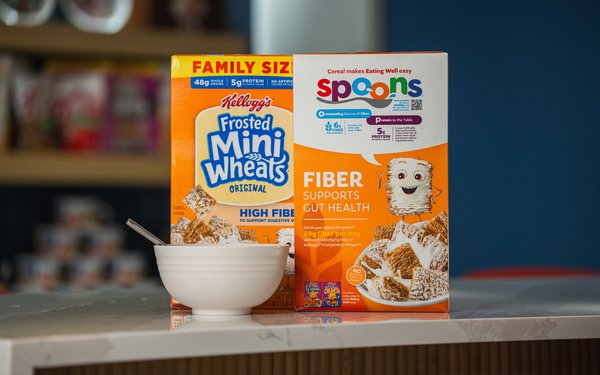
So the company is launching SPOONS, a back-of-pack initiative
that makes its packaging the message. The effort, which the company hopes will remind people that cereal can be a healthy choice, uses clear messaging and is initially rolling out on Kellogg’s
All-Bran, Corn Flakes, Frosted Mini-Wheats, Raisin Bran, and Rice Krispies.
advertisement
advertisement
The acronym is meant to make people notice that those brands contain simple ingredients, protein,
outstanding fiber, other nutritious foods, nutrients, and single-digit sugars, meaning less than 10 grams per serving.
And it’s part of the company’s bet that it can put some snap,
crackle or even pop into the long-soggy category, even as Americans’ eating preferences are changing fast. That includes younger consumers who crave other choices -- even vegetables -- to start
their day, bar-loving convenience shoppers, or GLP-1 users looking to up their protein and fiber intake.
The company, which used the Super Bowl to take a more humorous approach using
actor William “Shat”ner to hype Raisin Bran’s fiber benefits, is also stepping up its work with leading registered dietitians, asking them to create recipes for its “Fiber
Hack” social media effort. (By some estimates, as many as 95% of Americans fall short of daily fiber requirements.)
“We’ve really dialed up our marketing by leaning into
fiber with humor in our big game ad, launching SPOONS and introducing new innovations into our portfolio,” says Doug VanDeVelde, the company’s chief growth officer, in the announcement.
“As a newly private company, we have a lot of runway to do big things, and we are highly optimistic about the future of the category and our brands.”
WK Kellogg, which was spun off
by Kellanova in 2023 in its attempt to shed low-growth brands, was acquired by candy giant Ferrero Group last year, for $3.1 billion.
And of course, it still has to fend off rivals, including
such better-for-you newcomers as Magic Spoon and Catalina Crunch, and reinvented legacy competitors, like General Mills’ Cheerios Protein.
A spokesperson for Kellogg tells CPG
Insider that while a national TV campaign isn’t in the cards for SPOONS, the company is promoting the change across digital channels and in stores. QR codes on the packaging also call
attention to the changes for customers who want more information.
The packaging innovation comes after steady attacks from the Make America Healthy Again movement that targeted leading CPG
manufacturers, and WK Kellogg specifically. Last summer, the company signed an agreement to phase out the use of petroleum-based colors in its products, marking the first time a food company has moved
beyond a voluntary commitment to do so.
While more than half of its portfolio still has more than 10 grams of sugar per serving, Kellogg has made steps to reduce that over the last few years,
including a 25% reduction in its leading kids’ brands. The spokesperson says three-quarters of the portfolio now has less than 12 grams of added sugar per serving.
In the coming months,
the new packaging will expand to brands like Frosted Flakes and Froot Loops.
“Consumers today are increasingly focused on nutrition but often find labels complex, time-consuming
or difficult to interpret,” the spokesperson adds. “SPOONS was designed to address this by translating key nutrition attributes into simple, intuitive on-pack cues that support faster,
more confident choices. It complements existing labeling by making relevant benefits -- like fiber, protein and key nutrients -- easier to see and understand at-a-glance.”