How red, white and
bananas have brands gone to celebrate America's 250th birthday?
A quick stroll through the supermarket is mind-boggling. Coca-Cola has 52 collectible mini-cans, and Velveeta reshaped its mac
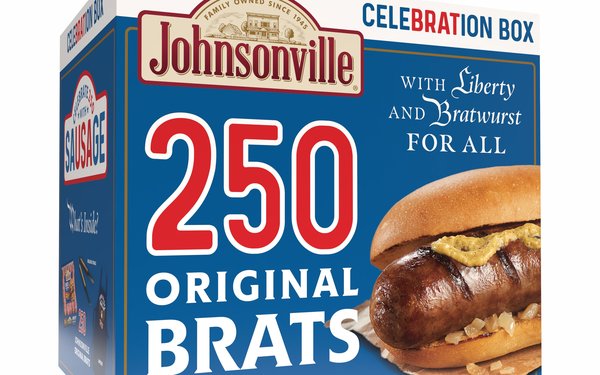
and cheese to look like stars and all 50 states. Johnsonville is selling 250 sausages in a CeleBRATion package, and Cuisinart is commemorating the historic moment with a portable ice cream maker.
You can see it on the road, too, with Chevrolet offering 250 limited-edition Corvettes, or Stellantis’ "Declaration of Deals" with “no taxation” incentives. It's in the air,
too, with United, Southwest and American rolling out new patriotic paint jobs for their planes.
The America250 hook is so prevalent it has become the ultimate
no-brainer, especially for CPG brands. Phil Lempert, aka The Supermarket Guru, notes in a recent column that patriotic limited editions generate incremental shelf space, earned media and social
amplification, can leverage nostalgia as a price-justification tool, and — perhaps most strategically — position otherwise ordinary products as collectibles.
advertisement
advertisement
But research from Ipsos suggests that betting on feel-good Americana is riskier than many brands realize. Some marketers are banking on a shared, uncomplicated
patriotism that the data says no longer exists.
For one thing, "Proud to Be an American" is no longer a given. "Tapping into the sentiment of pride isn't a
guarantee that you're going to connect authentically with wide swaths of Americans," says Alec Tyson, senior vice president and lead pollster at Ipsos. "There are sizable minorities who are more
ambivalent, or even a share who say, 'No, I don't feel particularly proud right now.'"
Second, being American isn't as central to people's identity as
marketers may assume, especially among younger consumers. Only 39% of Gen Z and millennials say being American matters to their personal sense of self — compared with 65% of their parents’
boomer cohorts.
And while typical patriotic marketing hinges on nostalgia and reverence for familiar American symbols, younger consumers are oriented
differently. They want change, and see it as essential to the nation's future. About two-thirds of Gen Z and millennials say adaptability is more important than reliance on long-standing principles
— a view that puts them at odds with the retro-Americana aesthetic dominating most America250 marketing.
That divergence, however, shouldn't be mistaken
for polarization. Tyson says the bigger, more useful insight for marketers is that America is far less divided than most people assume. "When you look past our debates around politics and return to
the founding ideals — freedom, liberty, equality, democratic government, religious pluralism — most people still align around them."
The Ipsos
report, based on approximately 4,700 respondents and conducted in both English and Spanish, bears that out. Some 84% of respondents say the most important part of being an American is treating all
people equally, regardless of background; 70% name voting. Being born in the U.S., meanwhile, matters to only 36% — the same share who say that protesting actions you believe are wrong is
essential to American identity.
What matters most to Americans for building a happy and fulfilling life, however, isn't political at all: it's family, and
enough financial security to meet their needs.
"It's hard to feel good about the state of the country if you're not feeling good about the state of your
household and your finances," Tyson says. "That's a takeaway I would underline."
Majorities of both Gen Z and millennial respondents say they've either
achieved the American Dream or are on their way — but 28% in each group say it feels out of reach. And across the full sample, only 19% believe America is doing well at providing opportunities
for prosperity. That gap shapes how younger Americans hear flag-waving marketing, and explains why it doesn’t resonate the way brands expect.
Companies
that speak honestly to aspiration and kitchen-table concerns will connect. Those reaching for Independence Day pageantry may not.
The biggest question,
Lempert argues, is what happens on July 5. Some brands will have built a real bond — a flavor that might catch on, or in some cases, a cause that may resonate. He points to Cheez-It’s
chili cheese dog cracker as an example of the former, and Maker's Mark, which is using the holiday moment to raise funds for the Farmer Veterans Coalition, as an example of the latter.
For brands willing to engage with the generational fault lines revealed by Ipsos research, July 5 could be a beginning rather than a hangover — the start of
marketing built on the American values that younger consumers actually believe in: opportunity, fairness and the belief that the best is still ahead.