Founder
Andy Dunn has already proven that Pie, the social events app he launched a few years ago, has plenty of legs. Started as a way to beat the loneliness stalking so many people, the connections platform
already has 300,000 users in Chicago (where Dunn is based) combined with Austin; Los Angeles and New York have the next-highest totals.
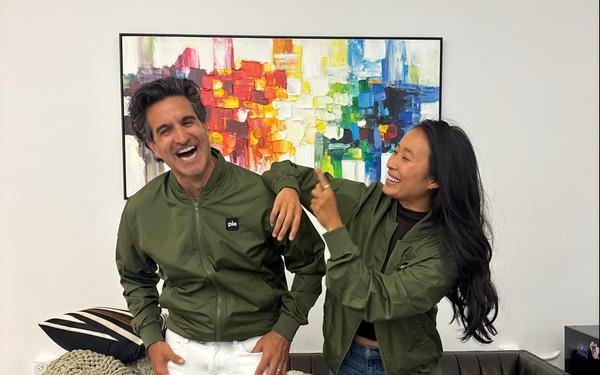
To take it to the next level, he has hired Nadya
Okamoto, founder of period brand August, as co-founder and CMO. Together, they think they can turn Pie into "an operating system for people's social lives." Not only can the app steer people
toward events they'll like, but it also uses an algorithm to help people find friends, connecting them with others with shared interests.
The two share plenty
of credentials -- both in D2C skills and experience with loneliness. Dunn became well known not just for co-founding Bonobos, the apparel company famous for its better-fitting men's pants, but for
selling it to Walmart in 2017. Since then, he's also made a splash as an author, including "Burn Rate: Launching a Startup and Losing My Mind," a 2022 memoir that chronicled his private battle with
bipolar disorder.
advertisement
advertisement
Dunn launched this iteration of Pie — which stands for "People I Enjoy" — in 2022. At the time, he was living in Chicago and
working on his book, and didn't realize how socially isolated he had become until his psychiatrist asked him: "When was the last time you had dinner with a friend?" Dunn was horrified to realize it
had been over two years. Around that time, he also read "Platonic," a book that argues people need to run into each other repeatedly — Dunn cites a range of five to seven times — in a
group setting before friendships can form.
"I thought to myself, 'I'm a busy dad, I've got a one-year-old, I just moved from New York, I'm writing a book, I'm
trying to build a startup — how am I going to get time to run into someone five times?'"
That led him to reconsider Pie, an idea he'd been fooling
around with pre-COVID as a way to find a date for his wife's mom. (That version didn't work out, but if you know any nice Jewish men over 75 in New York, get in touch with Dunn.)
For Dunn, the big idea became "a way to empower these community hosts that are bringing people together on a ritual basis, which is a monster Gen Z trend."
Okamoto, a menstrual-rights advocate, knew Dunn because he had been an early investor in August, the D2C period-products brand she founded in 2020. After he
introduced her to Pie, she quickly became a power user, helping to organize events and create content for Zoomies, a run club she now manages with her sisters in New York, with several hundred
members.
Her experience at August, building a brand with scrappy marketing and constant content creation, helped her build a social media following of 6
million — many of whom, she and Dunn hope, will become Pie users. She, too, has been wrestling with mental-health challenges, including a diagnosis of borderline personality disorder, which had
her yearning for new ways to find and build friendship.
"As someone who ran a community, I needed an organizing tool that was in one place. Before you know
it, I was talking to Andy every day as an overly involved advisor." She sees her new role as amplifying the platform. "The goal is to empower creators to do events, and then get users onto the app,"
she tells Marketing Daily. That starts with the Pie Creators Club, which compensates event hosts who drive new accounts to the platform through RSVPs.
Both Dunn and Okamoto use an analogy of online marketplaces like Airbnb, which requires both hosts and guests, or DoorDash, which needs drivers, patrons and
vendors. In this model, Dunn says, event managers are content creators, and the people who find them on Pie are called joiners, not users.
He says Okamoto is
uniquely qualified to lead that effort. "She's got a tall order, because you have to recruit both sides of the market simultaneously. And we're trying to solve a problem others aren't — becoming
the operating system of your social life means we have to be full-stack, from health and wellness to nightlife to live music to watch parties."
Most
competitors, he notes, operate in only one vertical.
Okamoto is charged with building "social density" in New York and Los Angeles. "She's a community host
and a monster influencer in her own right, and a movement builder from everything she's done in her career," Dunn says. "I don't think we could climb those hills without someone who's got that
combination of skills."