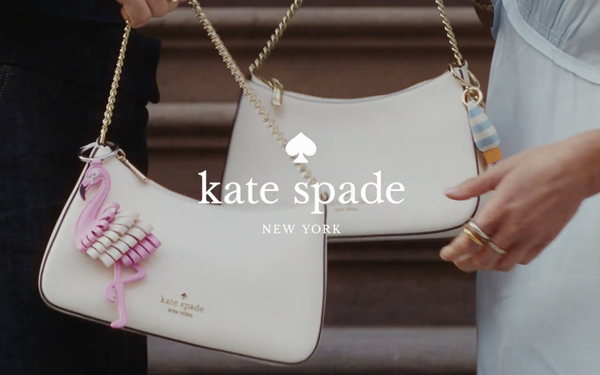
Kate Spade New York has named Allison Badea
as new CMO, in its ongoing efforts to solve the long-term collapse of the fashion brand. She replaces Kaisy Mae O'Reilly, who has been interim CMO since early 2025.
The brand has been
struggling to get back into fashion for years, and Badea’s appointment follows 14 consecutive quarters of sales declines. Her most recent role at L'Oréal was global senior vice president
of brand experience at Maybelline New York, and she has also held marketing roles at the beauty giants Kiehl's, Lancôme, Biotherm and Giorgio Armani brands.
“We're reigniting the
magic of Kate Spade New York,” Tapestry said in its hiring announcement, which it posted on LinkedIn.
Badea will have her hands full. In Tapestry’s most recent quarterly results,
released in May, sales at Kate Spade sank about 10%, falling to $219.6 million, from $244.9 million in the fiscal third quarter of the prior year.
advertisement
advertisement
Kate Spade’s stubborn declines mark a
night-and-day contrast to sister brand Coach, which has been a high flyer in the luxury category, scooping up millions of Gen Z fans while other accessory brands struggle. In the third quarter, Coach
sales soared 31% to $1.7 billion, from $1.29 billion. It also added more than 2.4 million new customers globally, led by a growing number of Gen Z fans, a 35% increase from the prior period.
On its earnings call in May, CEO Joanne Crevoiserat explained that marketing changes are already underway at Kate Spade. “What gives us confidence is that where we focus and invest, we see
signs of progress,” she said, with the brand adding 400,000 new customers in the quarter. “We remain committed to fueling brand desirability supported by marketing. Our 'Spark Something
Beautiful’ campaign continued this quarter and drove a lift in both consideration and purchase intent, proof that when consumers see our brand and content, we see traction.”
Still,
she acknowledged that unaided brand awareness has not yet improved: “We also know that turnarounds take time, and the path to long-term growth is not always linear.”
Tapestry has
said its successes come from a strategy that emphasizes building emotional connections with people, fueling fashion innovation, product excellence, and delivering compelling experiences. It also
relies on portfolio pruning: Last year, it sold off Stuart Weitzman, its long-underperforming shoe division.