In-show
product placements are alive and well in streaming TV, with some shows being singled out for the sheer volume of the products placed in them.
Just this week, the
TV Blog noted product placements in two new comedies. The first episode of the HBO Max “Big Bang Theory” spinoff “Stuart Fails to Save the Universe” had two of them --
Dinty Moore Beef Stew and Fancy Feast cat food.
Both brands were integrated into the script in a scene featuring the show’s two main
characters.
Over on Netflix, the first episode of the new Will Ferrell golf comedy, “The Hawk,” made mention of the real-life Korn Ferry Golf
Tour and the Waste Management Phoenix Open.
advertisement
advertisement
The biggest product-placement winner was Milky Way. The candy bar brand came up in the script at least
twice.
The show even created a comedic slogan for the bar -- “Delicious beats bulls--- every time.”
The new “Legally Blonde” prequel series “Elle,” which premiered July 1 on Amazon Prime, has
partnered with L’Oreal Paris USA, whose 1990s product lines are used by the show’s title character, Elle Woods. The show takes place in 1995.
L’Oreal brands seen on the show from the ’90s include Voluminous Mascara, Colour Riche Lipstick and True Match Foundation.
“As a
nod to the brand’s authentic on-shelf presence during the ‘Elle’ era, iconic products that reigned supreme in 1995 are integrated into the series, appearing in moments that reflect
beauty culture of the ’90s and Elle’s own self-expression,” said L’Oreal in a press release last month.
Among the shows that have
been singled out by fans for laying on the product placements a little too thick are the Netflix shows “Nobody Wants This” and “Emily in Paris.”
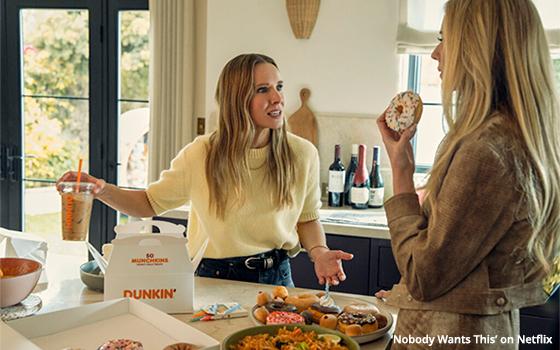
In “Nobody Wants This,” brands are reportedly being mentioned or shown all over the place, including coffee and donuts from Dunkin’ (photo above), a gift of a Jennifer
Meyer necklace, the labeling of a family “Door Dash people,” and one character’s “favorite snack,” Flamin’ Hot Cheetos.
Other brands making cameo
appearances in the show are beverage brand Spindrift, Clare V handbags and Seventh Generation spray cleaner.
Last year, The Guardiancounted 37 brands in 10
episodes of “Emily in Paris.” They included Chanel, Dior, Hermès, Starbucks, Apple and McDonald’s.
“If executed carefully [tie-ins such as L’Oreal's collaboration with “Elle”]
can supply a ready-made narrative container where the product's role feels like a plot-relevant prop, not an interruption,” said an analysis of the L’Oreal-“Elle” partnership
on ContentGrip.com.
“That said,” it continued, “the same dynamic can heighten risk: overt brand presence in
streaming has not always been welcomed by viewers, and the tolerance threshold varies by franchise, audience expectations, and how ‘in-world’ the integration feels.”
Research
into viewers' attitudes about in-show product placements bears that out. “What makes product placement annoying to viewers?” YouGov asks in a summation of a survey it conducted on the
subject.
“While many see product placement as effective, viewers draw the line when it feels overly intrusive,” YouGov said when it released the survey’s results last
month.
“The most common complaint is when placements feel forced or unnatural, with 48% of Americans saying this makes them excessive or annoying,” the research firm said.
“Other commonly cited issues include characters talking about brands unnaturally (41%), brands being shown too frequently (37%), products being used in unrealistic ways (37%) and branding
distracting from the story (36%),” YouGov said.
On the other side of the coin, YouGov's research found that 44% of survey respondents have taken at least one action after seeing a brand
in entertainment content -- searching for a brand online (22%), talking about it with others (18%), visiting a brand’s website of social media page(s) (16%). Only one in 10 reported actually
purchasing a product.