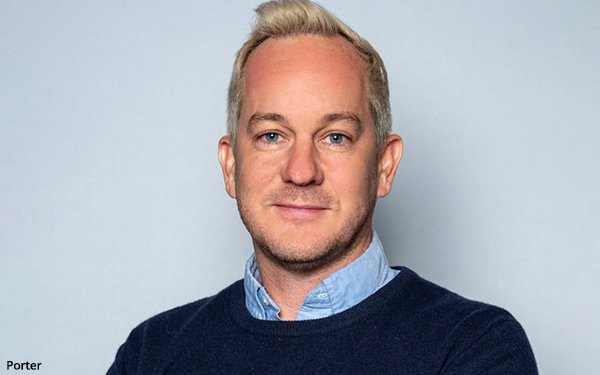
From traffic data to crowd
signals, Martin Porter breaks down the contextual triggers marketers underuse, why dynamic creative needs to move from stunt to standard practice, and how to leverage OOH as a performance channel.
1. During our last OOH Summit, you said, “If content is king, then context is the kingdom.” What does context
allow OOH to do that other digital channels can’t replicate?
The power of OOH isn't just that it reaches people, it's that it reaches them in the
physical world where decisions are actually being made. When someone sees a coffee ad on a cold morning commute, a ride-share message outside a transit hub, or a retail offer near a store location,
the message isn't interrupting their experience, it's enhancing it. That's what context enables. It allows the creative to be relevant not only to who the audience is, but where they are, what they're
doing, and sometimes even how they're feeling. Digital channels can find communities of interest based on your browsing history and intent, but it’s often intrusive and not reaching you in the
right modal moment when you want to act on it.
advertisement
advertisement
The combination of scale, location, and real-world relevance is something no other channel can fully
replicate.
2. Weather is one of the most obvious real-time triggers available to marketers. What other data or contextual signals do you think brands are
underutilizing in OOH?
Weather has become the gateway use case, but there are dozens of contextual triggers that are still largely
underutilized.
One of the biggest opportunities is mobility and movement data. Understanding whether people are commuting, traveling, attending events, or spending
more time in specific neighborhoods creates far more nuanced opportunities than weather alone. We have a travel client who specifically pulls in traffic data on time it takes to get to one airport
over another as a signal to book your flight with them for convenience.
I also think brands should pay more attention to cultural and community signals. Local
sports, concerts, festivals, and community events can create highly relevant moments that resonate emotionally and on a hyperlocal level.
And finally, an
underused area is business and commerce data. Inventory levels, product availability, fuel prices, wait times, ticket sales, and even market conditions can all be integrated into creative messaging.
How many times do you go to a travel website that says 4 people viewed this resort, or a fashion website that says 12 people bought this item today. Why aren’t those data signals being used more
in OOH? The more a brand can reflect what's actually happening around consumers, the more valuable the message becomes.
3. A lot of brands are using dynamic OOH
for big stunts. What would it take to make contextual OOH part of an everyday media strategy rather than something reserved for headline-grabbing executions?
The industry needs to stop treating dynamic creative as a special project and start treating it as a standard planning practice.
For years,
marketers have accepted audience targeting and optimization as table stakes in digital media. OOH should evolve in the same direction. Contextual creative shouldn't be limited to one award-focused
campaign a year; it should be embedded into every campaign where there's a relevant signal available. And as we’ve already outlined, there are so many signals to tap into so there isn’t
really a brand out there that can truly say “we don’t have anything to make our creative dynamic”.
But to ensure that it isn’t just seen as
a stunt there are three things we need to do. Better creative planning upfront, easier access to data integrations (that are not open source), and clearer measurement of impact.
When marketers can see that contextual messaging drives stronger attention, engagement, and business outcomes, it becomes easier to move from stunt to standard. The goal should be
thousands of relevant moments delivered consistently throughout a campaign.
4. How can marketers make the case to senior leadership for making OOH a strategic
part of the media mix rather than just another line item?
The best way is to stop talking about OOH as a format and start talking about what it does for
the broader media ecosystem.
OOH isn't competing against other channels; it's enhancing them. We consistently see OOH amplify search activity, social engagement,
online video performance, and overall campaign effectiveness. It serves as a high-reach, high-attention channel that reinforces messages consumers encounter elsewhere.
For senior leadership, the discussion should focus on business outcomes, not billboards. OOH delivers mass reach, builds brands, influences consumers close to points of purchase, and
increasingly provides measurable contributions to performance objectives.
When leaders understand OOH as both a brand-building and performance-driving medium, it
becomes a strategic investment rather than a tactical line item. Nobody leaves home without a device in their pocket so on that basis every OOH ad seen in real life is also immediately shoppable and
searchable.
5. What’s a recent OOH campaign you admire, and what do you think it gets right?
One campaign I
really admire is United Airlines' work in New York City. It's a deceptively simple idea, and they've continued running versions of it because it works.
The
effectiveness comes from its use of real-time traffic data to show journey times from that exact location to both Newark and JFK airports. It's built on a great local insight: many New Yorkers don't
like to admit that Newark is often the faster and more convenient airport simply because it's in New Jersey. The campaign uses live data to challenge that perception in a way that's relevant, timely,
and hard to ignore.
More importantly, it demonstrates that OOH isn't just a display medium. It's providing a genuine utility to consumers at a moment when the
information is valuable. It isn't interrupting someone or competing for attention. It's improving their understanding of the world around them.
For me, that's
where the industry is headed: campaigns that are contextual enough to be useful and creative enough to be remembered. The best OOH doesn't just capture attention. It earns it.
If you’re interested in submitting content for future editions, please reach out to our Managing Editor, Barbie Romero at Barbie@MediaPost.com.