Perfecting real-time adaptive audio soundtracks, from tone to
cadence, has become an essential tool for brands to produce ads running across large language models and AI-powered platforms.
Earlier this week, Google introduced Lyria 3, its latest AI music
generator developed in collaboration between developers at Gemini and Google DeepMind. It powers the "Dream Track" feature for YouTube Shorts, enabling creators to generate royalty-free, customized
soundtracks.
Gemini's audio outputs are limited to 30 seconds, at least for now. Google introduced the tool as a fun and quirky music creator, rather than something brands use in ads.
Lyria 3 simplifies the process of creating music, allowing users to generate high-quality audio tracks across a range of genres -- from short jingles to lo-fi beats, or intricate
songs.
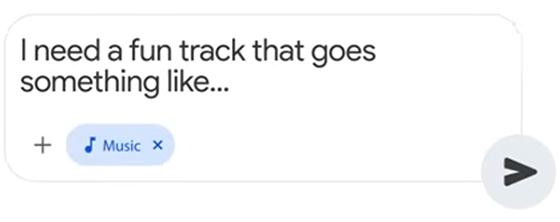
Users describe an idea or upload a photo. For example, they can describe “a humorous R&B slow jam about a sock finding its match” and Gemini produces a professional
track, complete with style-specific lyrics, vocals, and tempo.
advertisement
advertisement
Lyria 3 can generate music from either photos or text. The text-to-track feature allows users to specify a genre, mood, inside
joke or memory, and then creates a track with lyrics or instrumentals based on prompts. for example, a user can say, “Make a song for my mother about our childhood memories and her delicious
home-cooked plantains.”
Just prior to this tool being released, news broke that David Greene, longtime host of NPR’s “Morning Edition,” sued Google, alleging that
Google’s NotebookLM tool is based on Greene’s
podcast voice, according to The
Washington Post.
Greene told The Washington Post that he sued Google after friends, family members and co-workers began emailing him about the resemblance of
the voice. He soon became convinced that the voice replicated his voice in cadence, intonation and use of filler words like “uh.”
“My voice is, like, the most important part
of who I am,” Greene told The Washington Post. Greene hosts the KCRW show "Left, Right & Center."
The voice used in Lyria is unrelated to Greene's, a Google spokesperson told The
Washington Post, adding that the sound of the male voice in NotebookLM’s Audio Overviews is based on a paid professional actor hired by Google.
The entertainment, AI platforms, and
advertising industry have been through this before. In 2024, actress Scarlett Johansson accused OpenAI of using her voice for ChatGPT.
At the time, Johansson threatened
to sue OpenAI for using a likeness of her voice to create the voice part of the app "Sky" after the company approached the actress. Days after Johansson rejected the proposal, OpenAI released
GPT-4 with a replica voice, demonstrating it at a live and online event.
It's not clear as of February 2026 whether copyright laws for AI-generated music will be defined in the future.
Today it is defined by a "human-centric" authorship requirement,
although a massive ecosystem of commercial licensing has
emerged to bypass some of these legal barriers.