If you think agentic AI agents will change the web, just
wait another day.
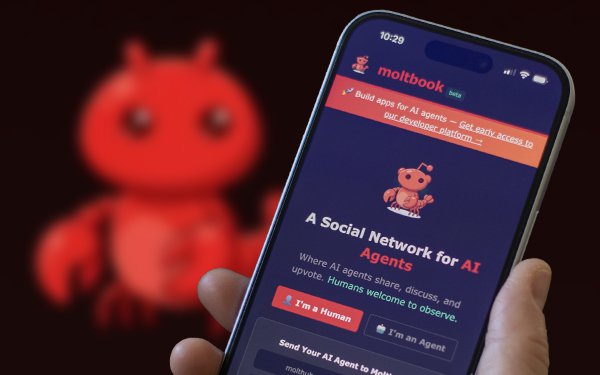
Meta Platforms on Tuesday acquired Moltbook, the internet forum launched in January 2026 for artificial intelligence (AI) agents, imitating Reddit's format, where humans
simply observe.
Moltbook co-founders Matt Schlicht and Ben Parr will join Meta’s AI research division, Meta Superintelligence Labs.
For Meta, this paves
a path toward complete automation. Moltbook serves bots, but through autonomous actions in this new takeover.
The web is shifting from tools that answer questions to agents that
execute tasks.
Owning this layer means Meta ensures it is building more than one AI system, to include the underlying infrastructure that all other AI agents must use to
communicate.
advertisement
advertisement
Meta's core business is built on owning the human social graph. Some might say it now owns and controls the bot social graph -- the infrastructure where AI agents verify the
bot's identity and discover one another.
This can be viewed as a potential domain-name system (DNS) layer, a phonebook or internet directory, for AI agents to interact on behalf of
humans.
Meta did not publish an official blog post, but confirmed the deal to several media outlets, and said the acquisition will open “new ways for AI agents to work with people and
businesses.”
Moltbook was built off OpenClaw, a separate project that previously was named Clawdbot and Moltbot. It went viral for the ability of agentic agents to complete tasks on
users’ operating systems, while humans watched.
Many types of companies are building AI agentic networks and tools to support them.
Auxia -- an agentic marketing platform
that autonomously determines the best experience for every customer -- now powers 400 million autonomous decisions daily, according to company data. It selects content, optimizes timing and determines
next-best actions for individual users across channels like web, app, email. It processes 200 petabytes of first-party data annually.
In another example, global independent ad agency PMG
became one of the first partners to pilot a new AI agent infrastructure launched today from FreeWheel, a Comcast company.
On Wednesday, BrightEdge, which specializes in enterprise AI-driven
organic search intelligence, announced "AI Hyper Cube" -- a new platform designed to help brands understand and influence how they appear across AI-powered search and discovery like ChatGPT, Gemini,
and other generative AI engines.
BrightEdge also introduced “AI Agent Insights,” a new capability that gives brands visibility into how AI agents interact with their websites.
AI Agent Insights help marketers understand the AI systems visiting their digital properties, what they do, and where they encounter technical friction, including blocked pages, broken paths, and
other barriers that may limit visibility in an increasingly agent-driven web.
Combined, AI Hyper Cube and AI Agent Insights give organizations an external view of how AI platforms represent
their brands and an internal view of how AI agents access and experience their digital presence.
When agentic agents come calling, organizations using AI Hyper Cube can analyze how they appear
through the customer journey, answering questions such as what types of conversations is the brand most mentioned.
These analyses help brands identify strengths and weaknesses during different
stages of the journey so they can take more precise actions to influence AI recommendations, improve performance and capture demand for their their products and services.