Despite plans to
introduce more AI agents into its social media
ecosystem, Meta has issued new statements around its prioritization of “original content,” alerting creators on updated algorithmic preferences as well as content-protection options.
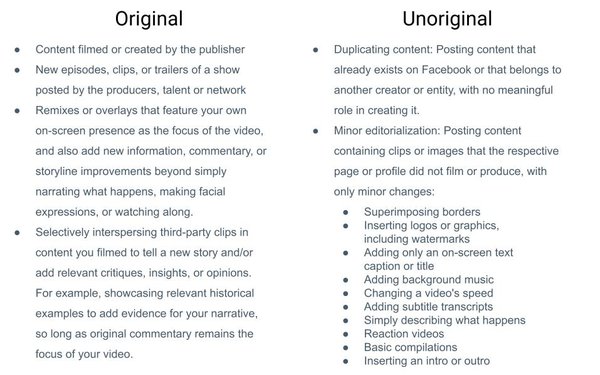
“Facebook prioritizes original content in Feed and Reels recommendations,” reads Facebook's updated content
guidelines. “To get the best distribution, Meta encourages Pages and profiles to post content they originally produced or have the rights to publish for the first time.”
According to Meta, for a post to be considered “original content” by Facebook recommendations, it must be filmed or created by the publisher or production company, or comprise new
episodes, clips, or trailers of a show posted by the producers, talent or network.
Original content can also be an “enhanced” version of something previously posted, with added
educational, critical, or entertainment value. Meta’s examples of enhanced content include added commentary, information or storylines that push the narrative of a video post, or the addition of
third-party clips that “add relevant critiques, insights, or opinions.”
advertisement
advertisement
Content practices considered “unoriginal” by Facebook include fully duplicating posts from another
creator, or posting content containing clips or images that the creator only added minor changes to.
Notably, this includes basic reaction videos and compilations -- two highly popular forms
of Reels across Facebook and Instagram.
“Creators who are not adding substantial creative value will see their content deprioritized, and they may see their account deemed
non-recommendable and demonetized, if they continue to post primarily unoriginal content,” Meta's announcement explains.
In addition to these updates, Meta is also in the process of testing
new content protection tools designed to help creators detect potential impersonation across Facebook and Instagram.
According to a recent Meta blog post, the company's de-prioritization of unoriginal content on Facebook caused both views and time spent
watching original Reels to double in the second half of 2025, compared to the previous year.
Meta is testing enhancements to the Facebook content-protection tool, inviting creators to detect and submit impersonation
reports in one designated space on their professional dashboard, with an automated imposter alert system.
Last year, Meta removed over 20 million accounts that impersonated leading content
creators, while impersonation reports dropped 33%, according to company-led findings.