Earlier this year, Natura completed selling off all the
international operations of Avon, except in Latin America -- where it is now repositioning the 140-year-old beauty/cosmetics brand as a femtech leader, focused on software, medical devices, and
digital services tailored to women’s health.
Avon revealed this reinvention by unveiling “the world’s first 3D bio-printed menopausal skin” -- or MenoSkin, for
shot.
“Created using cells from Brazilian women,” the brand explained, “this innovation maps thousands of skin mechanisms during perimenopause and menopause.”
Avon uses the MenoSkin for animal-free cosmetic testing, which “allows us to achieve an extensive level of precision in our formulas,” CMO and Vice President of Innovation Tatiana Ponce
said in a statement. To get word out about MenoSkin -- and a larger push around menopause and skin health -- Avon teamed with WPP’s VML Brazil to launch what a press release called the
“world’s first print ad run on lab-grown menopausal skin.”
advertisement
advertisement
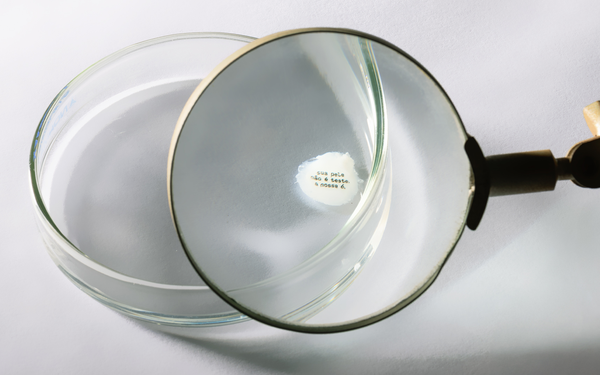
Not exactly a traditional print ad, the campaign involved the printing of the words “Your skin is not a test.
Ours is” (in Portuguese) onto a microscopic 5mm piece of the bio-printed skin. That skin was placed into an out-of-home display in São Paulo, which included an attached magnifying glass
for consumers to get a closer view. The production process and OOH ad are shown in this video.
Using the magnifying glass “was
meant to symbolize the historical scientific neglect of menopausal women -- something that only becomes visible when society chooses to prioritize it,” VML told Marketing Daily.
The printed message, “also served as the central manifesto for digital content and social media campaigns,” the agency added.
Avon’s transition to femtech has been
supported by an ongoing Natura partnership with Brazil’s Science Valley Research Institute for a mapping study called EMBRACE (Endocrine Mapping in the Broad Range of Aging and Climacteric
Experiences) involving 1,592 participants in the country’s capital Brazilia and 26 state capitals. The study will map the biological, social and emotional impacts of perimenopause and
menopause, considering factors such as population diversity, socioeconomic context and regional differences, Avon says.