New automaker Slate Auto is launching
an out-of-home campaign designed to get people talking about affordability.
The average price of a vehicle is hovering around $50,000, according to Kelley Blue Book. But the Slate
vehicle is expected to start in the mid-$20,000s when pricing is announced on June 24.
The Troy, Michigan-based company is ramping up to produce an electric vehicle, but
that’s really the least interesting thing about the vehicle, says Ben Whitla, Slate’s head of brand and marketing.
"That's just what we think a modern car is,”
Whitla tells Marketing Daily. “And if you look at the majority of our marketing materials on our website, we don't talk about it being an EV as one of the top pieces of communication,
and that's because that's not differentiated. What's differentiated is the affordable price, the customization. You go from a truck to a five seat SUV, all of a sudden it's a wonderful family vehicle,
right?”
advertisement
advertisement
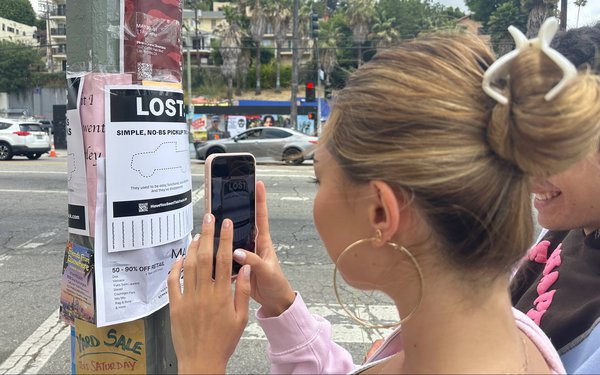
The out-of-home campaign features paper flyers attached to poles in some Los Angeles neighborhoods. The simple black-and-white sign shows the outline of a pickup truck
with the copy “LOST: AFFORDABLE PICKUPS” and then below the image “They didn’t cost as much as your mortgage. They weren’t the size of a house. And now they’ve
disappeared.”
A QR code is coupled with HaveYouSeenThisTruck.com, and there are pull-off tabs with the same URL, which
takes consumers to the Slate website.
The thinking behind the campaign started in a brainstorming session.
“We like asking ourselves the questions that I
think we think customers are asking themselves: 'What happened to the truck?'” says Whitla. "If that's what customers are asking, what's an unexpected and frugal way to get that
question in front of customers?"
Slate as an organization is “very frugal,” so the campaign had to be, too.
“So when something like this
idea comes across and we're all brainstorming and you realize you can do it for the price of a ream of copier paper, then it gets pretty exciting and pretty interesting, and well worth testing,”
Whitla says. “And so, rather than a big, shiny traditional campaign that everyone's doing with high production values, we thought, let's do a test and learn. Let's approach this a,s let's put it
out in the world and just see what happens.”
About 500 signs were distributed in LA neighborhoods where people are on foot.
“We'll be starting in some
other neighborhoods throughout the course of the year,” he says.
Anecdotally, many tabs have been pulled from the first round of signs, and there has been an increase in web
traffic.
“So it's certainly working and connecting,” Whitla says. “This was an unknown, I mean it's not like this is a typical marketing channel. Unless
maybe you're selling guitar lessons, this is not exactly a typical marketing channel for an OEM or a massive auto brand, so we treated it as a test and a place where we could try out some things.
We're super excited to see that so far people have been super engaged.”
The effort fits with the company’s low-key approach.
“So much of
marketing is shouting at you,” he says. “Especially in the automotive space, they want to make sure you know there's 17 heated cup holders. Our ethos is so different than that, where we
just wanted to pose the question to the audience that we think is already somewhere in many people's minds and put it back to them."
The company's AOR is Known, but this effort was created
internally.
The company’s plans for the rest of the year will continue to focus on unexpected ways to reach consumers, Whitla says.
In areas
that aren’t likely to have as high a degree of awareness of the Slate brand, the company will be using airplanes with banners at beaches.
“It'll be a little bit of
an obtuse message with a URL around affordable vehicles,” he says. The banners will have the goal of “let's just get people asking questions and creating a conversation around this versus
telling them, you know, again the zero to 60 speed, or advertising an APR, right? I think just trying to open the conversation. We're going to continue to test really unexpected channels and ways of
reaching people, and then we'll use data to decide if we keep doing it.”