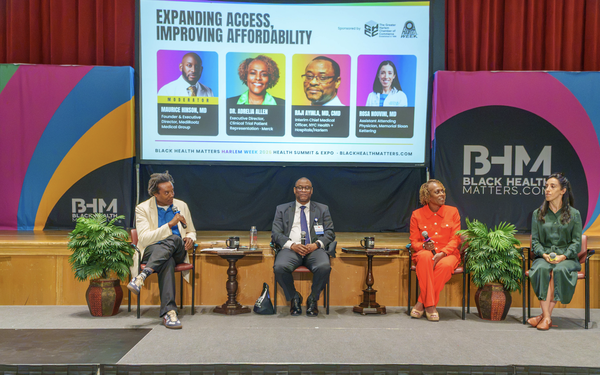
Black Health Matters (BHM), a
nonprofit founded in 2012 to advance health equity, no longer uses that term in seeking sponsorships from pharma companies.
“I can’t say ‘health equity’ in my
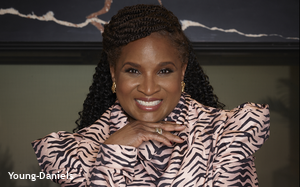
proposals,” CEO-Founder Roslyn Young-Daniels tells Pharma & Health Insider. “I say ‘population health.’ But people understand that we’re here to save
lives.”
Pharma support, which helps fund BHM’s signature local community events across the country, has been declining in the wake of the Trump administration’s anti-DEI
policies, Young-Daniels acknowledges.
But she goes out of her way to praise pharma companies for “still doing their best. I love this industry, and that they are still committed to life
sciences.
“They may not call it DEI, but they still have advocacy groups and departments. They want to work with partners that can help patients, and that’s what we do.”
advertisement
advertisement
A recent BHM Summit that attracted over 2,000 attendees in New York City’s Riverside Church, for example, received support from Pfizer, Merck, AstraZeneca, Novo and eight other pharma
firms.
Young-Daniels singled out Bristol Myers Squibb for its dedication to “advancing science for people who have multiple myeloma,” a disease that disproportionately
affects minority communities. “Not only do they come and provide support, but they bring in organizations like the International Myeloma Foundation.”
And “while pharma
support has been waning, that hasn’t been the case with local hospitals and other community groups,” Young-Daniels reports, primarily because they’re largely volunteer efforts.
“They’re the ones that doing the heavy lifting,” she states.
At the NYC event, Young-Daniels cited Memorial Sloan Kettering Cancer Center for providing free home
colorectal screening kits and “bringing people who spoke several languages.” She also lauded Mount Sinai Health System for doing on-site prostate cancer testing, and Weill Cornell Medicine
for “bringing its rare disease group.”
Other groups also get involved in BHM’s events, such as the American-Italian Cancer Foundation, which gave on-site mammograms, and
Choose Healthy Life, which provided referrals for blood panel tests through Quest Diagnostics.
BHM’s all-day Summits and shorter Forums attract people who are 40+, with roughly 80% being
women, Young-Danels said, because they “tend to be the CEOs of health for their families.”
The events are promoted through local media, including TV and radio ads, such as a buy on
WABC-TV in New York.
Over the past 14 years, BHM has run some 600 of its events, which
are primarily focused on preventative care.
Young-Daniels says to expect them at an increased rate. The group has been doing three Summits annually, for example, and next year plans to do
seven.
The reason? Increased demand in these changing times.
When BHM launched in 2012 -- the year the similarly named Black Lives Matter movement was born, incidentally --
Barack Obama was president, and the young Affordable Care Act had expanded access to health insurance and thus healthcare itself.
That’s when Young-Daniels, off a successful career as a
publishing and ad sales exec at such publications as Essence, Sports Illustrate and Fitness Magazine, decided to “become an advocate for the medically underserved.”
“This would be an amazing time,” she recalls telling herself.
Flash-forward to 2026. Donald J. Trump is president, and the Affordable Care Act -- not to mention health
equity itself -- has been under relentless attack.
In New York State alone, Young-Daniels notes, 450,000 people are losing their subsidies, so when it comes to health matters that people
thought they could put off, “they now understand that their ability to pay is compromised.”
And gains made over the years in health equity are reversing.
“The impact
is starting to be seen, but it might take two to three years,” Young-Daniels says.
“Rates are starting to decline for various conditions,” she explains, “because people
aren’t really encouraged to go see their physicians, and co-pays are disappearing. That makes what we do that much more valuable.”