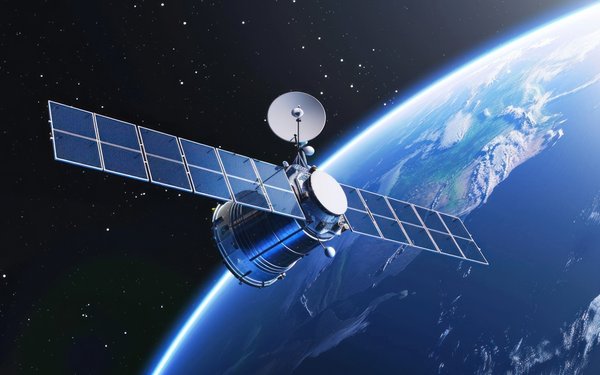
Google is working with SpaceX to launch and test a
fractionalized data center that requires one massive supercomputer computing network divided into small pieces and scattered across dozens or hundreds of satellites in orbit.
For advertisers, this technology will not change daily procedures now, but it lays a foundation for massive
scale, hyper-localized ad delivery and lower long-term infrastructure costs by the mid-2030s, based on a Google
paper and
research.
advertisement
advertisement
The Federal Communications Commission issued a public update on Sept. 18,
2026, confirming that it accepted the initial phase of the plan, allowing SpaceX to
continue in the testing phase to launch the first 100,000 "Starmind" AI computing satellites.
In September 2025, Google announced a research moonshot called Project Suncatcher that would scale
machine learning compute in space.
At the time of the blog post, Google said its next step would be to launch two prototype satellites by early 2027 that test hardware in orbit, laying the
groundwork for a future era of computation in space.
A bit ahead of schedule, the “computation in space” will become a fractionalized data center.
The new mission is
scheduled to fly on SpaceX's upcoming Transporter-18 rideshare on Oct. 1.
It will launch in partnership with satellite
company Planet Labs, and will assess how Google's AI hardware, Tensor Processing Units, can withstand launch forces, radiation and extreme temperatures in low earth orbit.
Space radiation
can disrupt or degrade electronics, including by causing data errors known as bit flips, according to one report.
Aside from Google, Elon Musk has been working on
Starmind, the name of SpaceX's orbital AI constellation.
In July, Musk posted on X about it, but there have since been technical details
released about the company's partnership with Nivdia, Google, and others -- until now.
Unlike traditional satellites, Starlink primarily acts as a router to pass internet signals between Earth
and the user, while Starmind satellites are built as the compute layer.
Project Suncatcher and Starmind are not the only projects testing space data centers.
A company called Starcloud
deployed an orbital AI data center, exploring how off-planet computing power could address the challenges on Earth related to space, cooling, and sustainability.