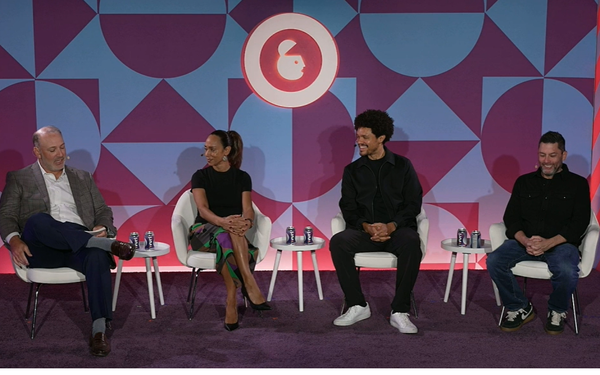
Former "Daily Show" host Trevor Noah is a comedian, author and production
company owner (Day Zero Productions) in partnership with Paramount Global.
And he’s also a YouTube star: Trevor Noah's YouTube World Cup Watch Party garnered millions of viewers across 27 episodes
during the World Cup men’s tournament this summer.
Noah took to the Advertising Week New York stage earlier today to talk about the evolving nature of sponsorships in the streaming era. He was
joined by moderator Scott Iason, head of sales for entertainment partnerships at Creative Artists Agency, Khartoon Weiss, vice president, commerce and global customer solutions, Google and Eric Levin
general manager and chief creative officer-content and innovation, Publicis Media.
advertisement
advertisement
Noah opined that some brands embrace new viewing platforms “but not the newness that comes with it.”
They need to find the parts of their brands “that most align with the property” they want to partner with.
Love Sac was one the sponsors of his World Cup Watch Party and he gave a
shout out to the brand for letting him have some fun with the brand’s name during the series. “They were in on the joke,” he said.
Brands need “to trust that I have a style to
give you a different vibe,” which will keep viewers tuned and engaged,” he said.
On a broader level, Weiss opined that the creator era has sparked a wholesale shift in trust in the marketing
world from brands and institutions to individuals. That shift, she added, “is driving bottom line results.” In many cases creators will drive more product searches and sales than other
forms of promotion, like regular ads.
Levin said that he looks for potential sponsorship talent that understands what a brand needs to glean from the partnership “while being
themselves.” Sometimes brands express a desire to be bold but safe at the same time. “They’ll say, ‘we want a first-ever' but need to know it will work” going in, he
said. “As a brand, you have to let go. “
And be flexible, added Noah. His Watch Party is a case in point. For the final episode, he and his production team tossed the script and instead
of doing an in-studio show, opted to live-stream at the stadium as the championship match played out.
That required all sorts of production audibles including the creation on the fly of multiple
broadcast packs in the stadium. Chaos ensured, with sound and visual misfires that were fortunately remedied quickly, Noah said, adding that the miscues were humorously integrated into the show.
“To their credit,” he added, none of the brands bailed, even though they had contracted for a finale that was produced in studio.
Pictured above (l to r): Iason,
Weiss, Noah and Levin.