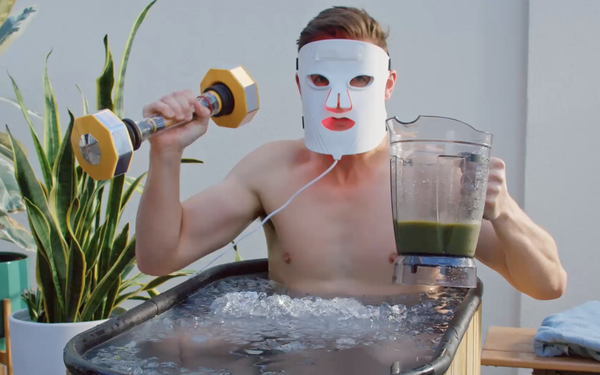
Dollar Shave Club is trying to regain its title as a category
disruptor by celebrating a novel marketing idea, at least in the days of ice baths and red-light masks: Maybe American men are looking for permission to buy into a “good enough” shave.
With a slim budget, the former Unilever subsidiary is launching “Perfectly Good Is Perfect,” a new campaign reminding men that sometimes a basic razor is all they need. It also launches
the new Trusty 2 Blade razor, a budget-friendly razor with a redesigned handle.
Laura Higgins, chief brand and innovation officer, tells Marketing Daily how the brand is trying to
regain its anti-bullshit reputation in a crowded category.
This interview has been edited for length and clarity.
Marketing Daily: What’s the overall marketing
strategy?
advertisement
advertisement
Laura Higgins: What Dollar Shave Club has always been really good at is calling bullshit on the establishment and on different conventions that are out there. That started
with our launch in 2012, saying, 'Why are we paying so much for razors?’ For the last few years, we’ve leaned a little into being absurd. I’ve been here about six months, and this
campaign brings back some of that core insight of “Enough is enough.” A lot of people are realizing that -- whether because of the economy or this culture of perfectionism -- they’re
just tired of it. It’s exhausting.
And we want to use our Dollar Shave Club voice: irreverent, cheeky, sometimes inappropriate. People do want to laugh, and they want to poke fun at
things other people take too seriously. We’re selling razors, not saving babies.
Marketing Daily: In 2012, this brand was one of the original disruptors, offering subscriptions
that appealed strongly to millennials. And there were a few years of pure D2C magic, and Unilever paid $1 billion to buy it in 2016. Many of those disruptor brands are now old-hat. What’s
changed?
Higgins: It was magic. But you're right, things have changed quite a bit. There aren't as many people doing subscriptions. Not as many people are bran- loyal in general; the
economy has changed quite a bit, and people are having to make some tough decisions. Gillette is expensive, and brands like Harry's have taken over our messaging, if you will.
Harry's is our
biggest competitor. Gillette is still the market share leader, but it’s been declining over the past five or six years, with Harry's mostly stealing that share. Harry’s is kind of making
me mad. It pretends to be the challenger brand, yet it's launching things that feed into the perfectionist culture. Does anyone need a cold plunge bath oil?
And then there is the disposables
category, and unfortunately consumers are having to trade down because the economy is so tough. So we’re looking at disposables not as a competitor, but an opportunity -- our two-blade is z
quality razor for only pennies more.
Marketing Daily: Not just Harry’s, though. Dr. Squatch, Manscaped, and even Axe and Old Spice have gone deep into making men's personal care
sound more irreverent. Doesn’t that make it very hard to be original?
Higgins: That is literally the most difficult part of my job right now: How do we break through when so many
brands are using our 2012 playbook? For me, it’s about staying true to our roots. And perfectionism is something they aren’t making fun of -- we are. We know you probably don’t need
a 10-blade razor.
Marketing Daily: You’re
65% owned by Nexus Capital Management, and 35% by Unilever. The downside of not being part of a big machine is smaller budgets. What’s the upside?
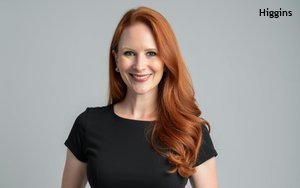
Higgins: I’m relatively
junior for a CMO role. But our CEO has enabled us to make decisions and execute fast with autonomy, something we couldn't do under Unilever. I go from brief -- which I write myself -- to execution in
weeks or months.
My husband works for Clorox, and right now he's briefing 2028. So we have been given the gift of moving fast, and AI helps. I’ve got a small, fabulous creative group --
there’s six of us. We can go from concept to AI prototype in about three weeks, and then from concept brief to live production -- the only thing we don’t do internally -- in a couple of
months.
Marketing Daily: What metrics are you watching most closely?
Higgins: If you look at our emails versus social versus TV, we were a little all over the place. My
goal with “Perfectly good is perfect” is that it starts to tie us together and increase brand recognition. Another is that many people know Dollar Shave as the value brand. And honestly,
our razors are good, and that's the perception that I'm trying to change. We’re not just a cheapie brand. So I'm tracking that quality indicator on my insights.
Marketing Daily:
But “dollar” is in your name, which is tricky.
Higgins: I know. Apparently, back in the Unilever days, they played around with getting rid of the actual name, like Kentucky
Fried Chicken went to KFC. They talked about it just being DSC, and people didn’t get it. And maybe there might be room to do that with line extensions. But while we're in shaving, we should
lean into what people know us for. And for now, we want them to remember us as the same Dollar Shave they knew in 2012 -- a perfectly good razor for a lower price.