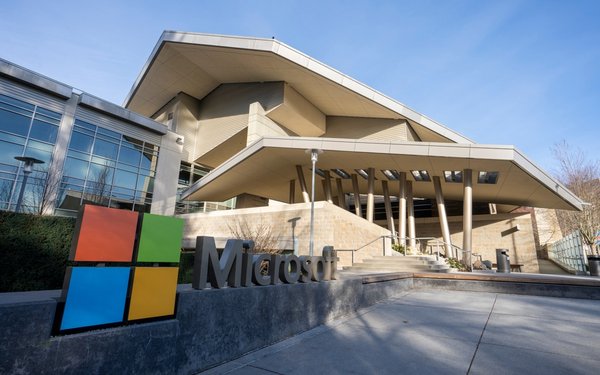
Microsoft has set a Voluntary Exit offer for some employees
in Canada, India, the United Kingdom and United States -- the second time it has done so in this year.
Amy Coleman, executive vice president and chief people officer at
Microsoft, published the offer in blog post after sharing it with employees.
The choice-to-leave offer announced today aimed to create an incentive to employees to quit their jobs
voluntarily. It targets workers who might already be thinking about changing careers, retiring, or leaving the company in the near future, Coleman wrote in the post.
Part of the post reads
like a special holiday offer that a marketer might write to promote products and services.
"This is a time-limited, voluntary program that gives those who are eligible the opportunity to leave
Microsoft with financial support and career planning resources," Coleman wrote. "Some organizations are providing the Voluntary Exit Offer, and some are not. Participation varies based on each
business’s priorities, customer commitments and workforce needs."
advertisement
advertisement
Eligible employees received an email with a link to their Voluntary Exit Offer details. There have been some reports
that the offer excluded employees in data centers, engineering teams, sales and marketing, because these teams "decided not to participate."
Microsoft had roughly 223,000 employees as of
June 30, per the company's 10-K filing for 2026. The numbers means the offer has been extended to
about 27% of the company's workforce.
Employees must decide whether to take the offer by early December, and those who participate will leave Microsoft on Dec. 31.
Microsoft last
year cut about 6,000 employees in May 2025, and more than 300 in early June 2025. In July of this year, the company cut about 9,000 positions, under 4% of its global workforce. The gaming division
took the biggest hit.
Capital expenditures for the company in the second quarter of 2026 rose 70% to $41.0 billion, including finance leases. About two-thirds went to short-lived
assets such as CPUs and GPUs. And despite that rise in capital expenditures, Azure passed $100 billion in annual revenue for the first time.
Reallocating cash for massive AI expenses could be
behind the buyouts.
An AI infrastructure is incredibly expensive to build, scale, and maintain, and Microsoft is under pressure to control daily operating expenses because of unprecedented
sums being poured into data centers, physical land, and specialized chips.
Many ties Microsoft will shield teams tied to sales and monetization from voluntary workforce reductions. While
back-end administrative, product engineering, or gaming divisions can be streamlined or consolidated without immediately halting cash flow, losing marketing professionals threatens immediate pipeline
and customer acquisition metrics.
Investments in artificial intelligence have delivered zero financial payoff to corporate America outside of the technology sector, Torsten Slok, partner and
chief economist at Apollo, penned a blog post this past weekend.
Slok laid out the economics of investments, writing that revenue per worker continues to rise, along with profit margins for
the companies known as the “Magnificent 7” like Google, Microsoft and Meta Platforms, but flat for the Standard & Poor’s 493.
There are still no signs of AI boosting
productivity growth and no impact on the bottom line, and mainstream corporate America is pulling back and starting to view token spending not as a source of growth but as a cost center that weighs on
margins.
"The question looking ahead is whether, even as models become commoditized, mainstream corporate America can turn increasingly cheap intelligence into higher revenue growth and higher
profit margins," Slok wrote. "That may be harder than it sounds. AI may be a great calculator, but in business, intelligence is mostly judgment."