Generative AI
may be the world’s most prolific content machine, pumping out endless reels and brand-ready “moments,” but Dick’s Sporting Goods knows audiences are tuning it out. So the
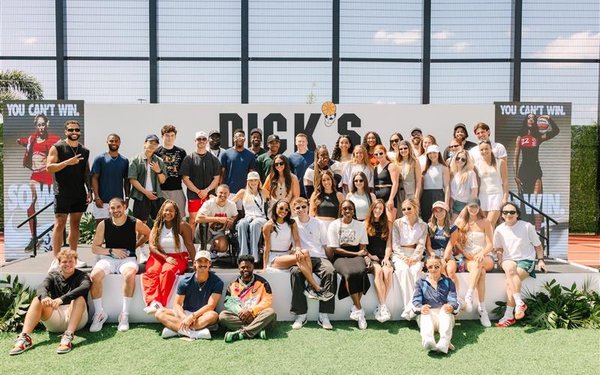
retailer is expanding Dick’s Varsity, a creator program built on messy, human sports storytelling. The 2026 edition of the Varsity Team is essentially a hedge against blandness, says Nicole
Marcus, influencer marketing lead. This year’s version will enlist more athletes, many of them employees, who are willing to show what it’s really like to train, get hurt, rehab and
grind.
“People want that first-person authentic content,” she tells Marketing Daily. “Audiences are overpolished, high-photography shoots. They want to hear from
their comfort creators—the people that feel like friends.”
advertisement
advertisement
Dick’s launched the program in 2023 and opened it to the public for the first time last year. It’s not
replacing traditional influencers or the retailer’s marquee uses of mega-athletes like J.J. Watt and Tom Brady. But the Varsity Team skews toward athletes who document their daily lives,
including Olympians and Paralympians. Some have as few as 1,000 followers, who partner effectively with brands like Adidas. Several posted through injuries last year. “We care about the
journeying, the grit, the tough moments,” Marcus says, “not just the shiny medal at the end.”
As AI and influencer strategies evolve,
Dick’s thinks the appetite for rougher, more personal content will grow. “Our anticipation is that people are still going to want that first-person authentic content,” Marcus
says.
Sports is fertile ground for that approach: built-in drama, plot twists, and a fan culture that increasingly treats creators as real-time reporters.
That’s especially true in women’s sports, soccer and emerging Olympic events, which Marcus says are gaining creator-led attention ahead of LA 2028. Dick’s sees creators as a cheaper
way to buy access to those conversations, especially around tentpoles like the Super Bowl and Olympics.
The economics matter. Creator-athletes are conversion-
and relevance-friendly. “If I can work with someone who already knows our product, can read a brief, and is posting every day, that’s cost-effective,” Marcus says. Dick’s
boosts their posts with paid media when needed. Meanwhile, the content gets repurposed internally—from ecommerce to HR to media network deals—something a one-off TV spot can’t
do.
Whether it scales remains an open question. In 2025, Dick’s got thousands of applications and chose 50 creators—18 of them employees—who
produced 2,500 content pieces and generated 40 million impressions, working with big brands like New Balance and Hoka, as well as such newcomers as Gymshark.
The move signals a shift in creator strategy, with growing interest in consistent, first-person sports storytelling that AI can’t manufacture.