Following up on its 2024 benchmark study on principal media buying, the Association of National Advertisers (ANA) has
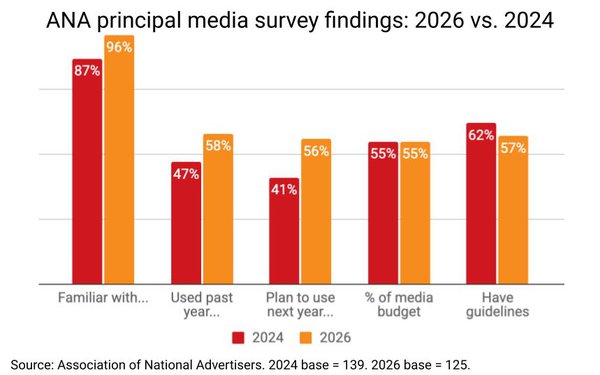
released a new one showing the practice has become far more prevalent among big advertisers. More of its members of are familiar with the practice, have used it in the past year and plan to use it
next year.
That said, the share of total media budgets being bought by principal media arrangements is remarkably the same two years later: 55%.
One potentially
concerning change is that fewer of the ANA members say they currently have company guidelines for utilizing principal media: 57% currently, down five points from 62% in 2024.
One
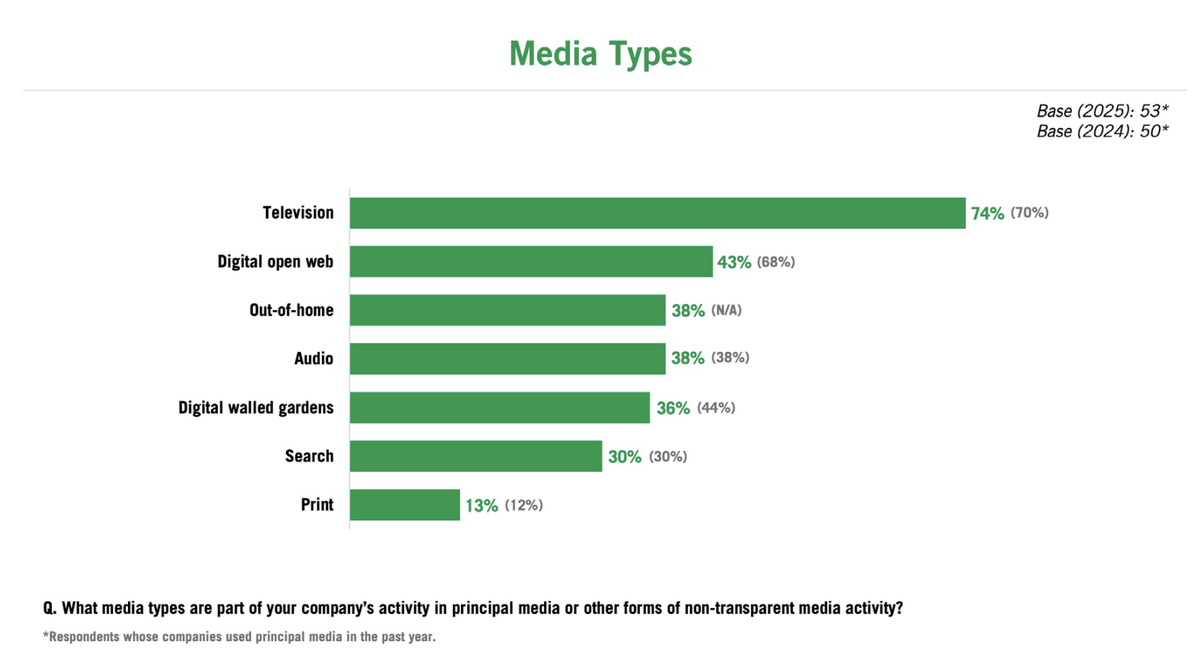
other striking note: While TV remains the dominant media bought via principal media arrangements (74%, up 4 points from 70% in 2024), digital has plummeted.
advertisement
advertisement
For open web buys,
digital fell to 43% currently from 68% two years ago. For “walled garden” buys, it declined to 36% from 44%.
That last part surprised me, because it was my understanding
that the big digital platforms almost always treat big agencies as principal media buyers, regardless of what the stated arrangement is between advertisers and their agencies, but it could be that
more ANA members are practicing what Acadia founder Jared Belsky has been preaching and are paying digital media
directly, not through their “agents.”
The ANA study doesn't really get into that, but it does note that there are some big differences in the way advertisers view the
role of principal media-buying in digital, because it’s not always pure-play working media dollars, and often has technology and data costs bundled in.
“In our
qualitative discussions, we probed interviewees regarding the decline in the use of the digital open web,” the ANA report notes, adding: “One media executive at a consumer-packaged goods
company said they had grown more cautious about using principal buying in digital environments and did not want cost savings to come at the expense of effectiveness or quality, cautioning that cheaper
media is sometimes ‘less costly for a reason’ and contrasting those concerns with television and CTV, where quality control felt more predictable.”