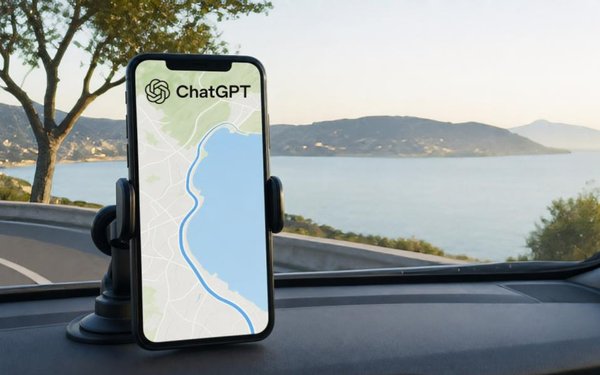
OpenAI has dropped the "Sponsored"
label on its ChatGPT Ads and renamed its "Ad" label across its platform.
Brodie Clark at SERP Alerts spotted the change and
reported it on his blog.
ChatGPT is now labelling ads that appear at the bottom of the output with a more prominent “Ad” label,” rather than a “sponsored” label that sits alongside a disclaimer at the bottom of the results.
“The ads can be related to previous queries within the session, not directly related to
the output it appears on (which feels somewhat irrelevant),” he wrote.
advertisement
advertisement
OpenAI has moved ChatGPT closer to real-time competition with Google by having the ability to not only serve
information and ads related to conversational intent, but also directions and relevant ads that serve up at the bottom of the page.
When querying travel plans, ChatGPT also brings into the
conversation such topics as weather, clothing and lodging options, mileage, and directions.
One feature is missing today. OpenAI has not publicly announced plans for ChatGPT to provide
continuous, real-time driving alerts or navigation such as Google Maps, Apple Maps, or Waze. It can provide turn-by-turn instructions, but cannot take into consideration road construction and other
constraints.
For example, if a user asks ChatGPT, "What's the delay at the South Entrance to Yellowstone right now?" It will check the latest available reports and tell the user if the park or
state transportation agencies are reporting wait times or restrictions, but it cannot provide the information on its own in real time.
AI as a navigation tool for OpenAI is an area where the
capabilities of conversational AI and traditional mapping software could converge over time, but today they remain separate, whereas Google integrates them.
Google Maps provides real-time
updates by combining the user’s live location with massive amounts of real-time traffic data and routing algorithms. The system is constantly updating while the person drives.
When a
navigation begins, the user’s phone continuously shares its GPS location with permission. Google Maps knows the speed, direction, and planned route in which the car travels. OpenAI does not yet
have this information.
Google also depends on live traffic feeds, continuously updating traffic, road closure and incident data, which typically comes from mapping providers.
In
Google, search results often serve up as a mini map and pins, and clicking on a specific location often allows the user to jump straight into Maps, which also pulls in Search data, reviews, and
business information. The latest, “Promoted pins,” now show up inside Maps but are powered by Google Ads.
Google has been merging the experience for years. Users can start in
Search and end up navigating in Maps, or start in Maps to read AI summaries or reviews from Search. Gemini, Google’s AI technology, now acts as a layer of technology on top of both.