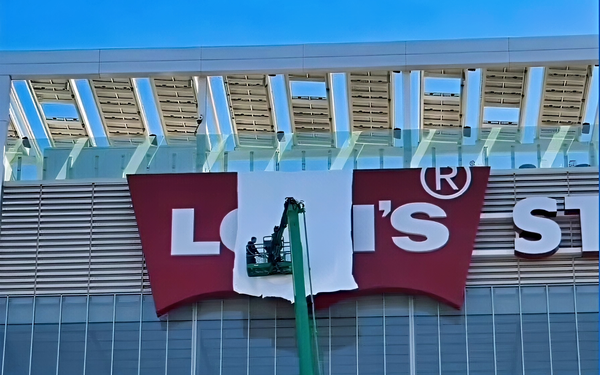
Levi's turned a plain white tarp into more than 1 billion
impressions, creating its most-viewed social media campaign ever. Michelle Gass, CEO of the denim giant, revealed that videos of the canvas
covering up the "Levi's" name at Levi's Stadium — done to comply with FIFA's strict branding rules — were such a hit that the company took the idea to stores worldwide. It's even monetizing the results by selling limited-edition T-shirts featuring the redacted logo.
In an earnings call for the company's second quarter, Gass credited the company's light-on-its-feet marketing organization. "The team saw that opportunity,
leaned in, and made that into a big moment for the brand," she said. "It just shows the power of this culture of being fast and agile and really maximizing the moment. We'll continue to find those
types of moments."
advertisement
advertisement
Levi's wasn't the only brand to benefit from that style of ambush marketing. Gillette, which owns the naming rights to Gillette Stadium,
where the Boston games have been played, also had fun with it, using shaving-cream imagery to cover its name.
Apple's Beats by Dre got its own boost when FIFA
officials asked some players to cover the branding on their personal headphones with tape — echoing what happened to Heinz, which covered its name with in-stadium ketchup bottles. In both cases,
the cover-up drew more attention to the brand than it would have gotten otherwise.
In some circles, that dynamic is known as "the Streisand Effect," named for
Barbra Streisand's famously failed 2003 attempt to remove photos of her home from the internet — an effort that only drove more searches for the very images she wanted gone.
Gass's remarks came alongside an impressive 8% sales gain in the second quarter, with revenue rising to $1.6 billion and operating income climbing to $164 million, up
from $153 million. Both results were ahead of Wall Street expectations, and the San Francisco-based company also raised its full-year sales forecast to between 7% and 7.5%, up from prior forecasts of
5.5% to 6.5%.
Sales gained 9% in the Americas, which Gass said indicates that the company's new direction — turning Levi's into a denim lifestyle brand
— is a win with consumers. That includes strength in the women's category, with those sales rising 11%, as the company gained share across categories. Notably, it's also making a splash in
luxury, with revenue from its small Blue Tab jeans franchise — priced in the $300 range — up 40% in the quarter. "While this is a relatively small business today, there's no reason why
this can't be $100 million, $200-plus million over time," Gass said.
The company also reported progress at Beyond Yoga, with sales up 16% for the quarter,
which Gass described as an "untapped opportunity." The company is still experimenting with its small fleet of about 20 stores, expanding beyond traditional activewear like leggings and tanks and
moving into lifestyle categories such as casual pants, travel wear and linen.
Gass found multiple occasions to credit brand marketing with the company's
progress, saying the brand's strength continues to be its main competitive advantage. "Every quarter, there are new ways for us to show up at the center of culture," she said. "We do that globally. We
do that locally. And we have unparalleled brand heat around the world."