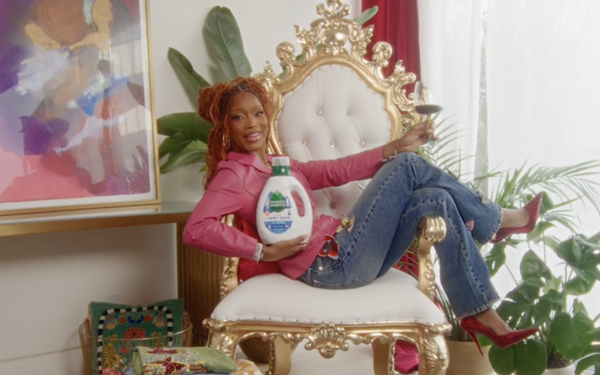
Billy Collins, new CMO at Seventh
Generation, knows a winner when he sees it. Collins joined the Unilever-owned brand last April after a lengthy consulting gig with the company. And he saw the company's new "Don't Do Extra"
dishwashing campaign, starring actor Keke Palmer, do well.
The brand had been looking for a celebrity that fit with efforts to liven up its marketing and target a consumer it called "the
fearless optimist." Palmer's admirable performance made sense for her to move into laundry, with a campaign launching this week.
Collins tells Marketing Daily what the decades-old bio-based cleaning brand hopes to achieve.
This interview has been edited for length and clarity.
advertisement
advertisement
Marketing
Daily: So why extend the Palmer partnership to laundry, and why now?
Collins: We were looking to say, "You can be extra in life, but you don't need extra things in your cleaning
products." She is very "extra" and has been a great personification of that aspirational person. She is someone who realizes that life is messy but knows she can solve the problems. That's what we're
trying to personify as a brand, and Keke is that to a T. Consumers can look at her and say, "Ooh yeah, she can handle it. I can handle it, too."
Marketing Daily: Seventh Generation has
been around for a long time, and while it's well known, this is a rough moment for CPG brands. Despite the higher interest in healthy, fragrance- and dye-free products, consumers are trying to cut
back. How are your core customers responding?
Collins: We're performing well, both with the campaign and leading up to the campaign, and growing our market share faster than the
category. People do see the full value proposition of Seventh Generation. It's not just about the loyalists. Our ambition is to double our business by 2030, so that means getting into more households.
This campaign allows us to break people out of that autopilot mode of buying conventional products. We want them to say, "Oh, here is something that is effective, but also, I can feel better about
using it."
Marketing Daily: It feels like the goal of sustainability has weakened for many consumers.
Collins: In our category, there's a perception that green doesn't
work. So it's not necessarily that people are deciding to buy less of greener products, but there's a debate — is it actually going to get rid of my stains? Clean my dishes? Clean my
countertop?
So we are elevating our efficacy claims, because we have amazing science behind us, as well as the Seventh Generation legacy. People are willing to pay a little more if they
believe the product will work. That's the gap we're facing. People do say, "I want products that are green and good for the environment and aren't putting things into my waterway. But I just don't
believe that they work." Between 60% and 70% say they want a green cleaning product, but only 20% to 30% purchase it.
So this campaign gets them to rethink that, and puts it in terms of
relevant culture.
Ads for green products have historically been a woman in nature, walking around trees and plants, and very minimalistic. They miss the fact that this is just life. And while
I may not be out planting a tree every weekend, I am trying to make small choices where I can have a better impact.

Marketing Daily: Your joining the company roughly coincides
with Unilever's corporate decision to emphasize social over other media. Obviously, Palmer has a large social following. But how else does that focus show?
Collins: It really sets us up
for what Seventh Generation has always tried to do. And Keke is a social native. She's super entertaining, and the queen of memes.
What we've changed is the approach to content: It's not just
about that 30-second hero spot, but all of the additional content Keke can bring to life. So what does this idea of "being extra" mean for our influencers, who might talk about their lives and the
products that they use? It's great to be extra in yourself, but don't do extra in the products that you have.
Marketing Daily: Who is the main target?
Collins: We talk
about it as the conscious consumer, more of a psychographic than a demographic. We've been blown away by the diversity, age and income range that has shown up in our research. They want to make that
choice to find a product that's safer, that's greener, that fits with their sort of healthier lifestyle and wellness desires.
They may not be dissecting every label, but they're looking at
ingredients. They are involved in social media — not just Meta, but Reddit, YouTube and Pinterest. And they use it for research — you should see some of the stain-removal sub-Reddits.
Marketing Daily: Can you say a bit more about why this creative approach?
Collins: It's unique. It has a bit of a retro feel, hearkening back to old soap ads. And it all comes
in this story that we're telling, about Keke embracing the fact that she's selling product. Consumers know they're being marketed to. And so we're breaking the fourth wall. It was lots of fun to
develop.