To start earning money from
ads and subscriptions on YouTube, creators signing up for the platform’s Partner Program will soon have to meet higher eligibility standards.
According to
YouTube’s announcement Monday, creators will need to show
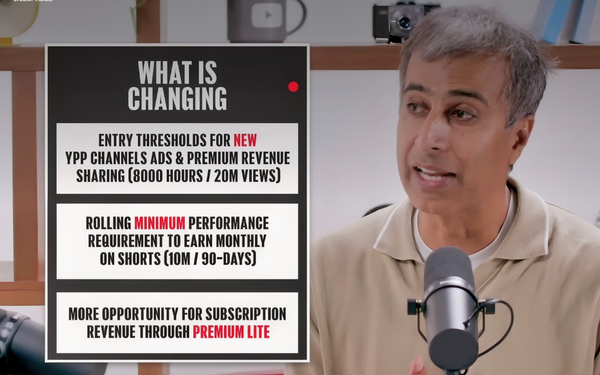
at least 8,000 qualified watch hours over the past 365 days or 20 million qualified Shorts views over the past 90 days to begin monetizing within the 20-year-old YouTube Partner Program (YPP).
These numbers have effectively doubled YouTube’s current YPP requirements, which require that creators have
1,000 subscribers and 4,000 watch hours over the past year, or 1,000 subscribers and 10 million Shorts views over the past 90 days.
advertisement
advertisement
These are the first major changes YouTube has made to its revenue-sharing program since 2018, when the company’s eligibility
requirements moved from 10,000 views per channel to the current model.
Starting on February 1, 2027, the Google-owned social media company will also need
creators to maintain 10 million Shorts views in a 90-day period to continue being eligible for ads and subscription revenue sharing in the short-form video feed.
“Channels below this threshold remain in YPP and continue earning on long-form content, with Shorts revenue sharing automatically resuming once they cross 10 million views
again,” the company’s announcement explains.
For channels that perform below the 10 million view
threshold, YouTube plans to introduce other incentives in the future, including bonuses for YouTube Shopping, brand deals, and “earnings boosts for starting or growing trends.”
With over 3 million creators in the YPP, YouTube’s heightened eligibility requirements for monetization are meant to “keep pace with the growth” of the
platform, which now sees over 200 billion daily Shorts views and over a billion hours of watch time on TV per day, according to the company’s announcement.
By doubling
the view requirements for monetization, YouTube may be making it harder for creators to earn money from advertisements. The changes could also deincentivize creators with niche followings -- a subset
of the platform's creator economy that smaller brands often seek out to break into specific communities.