Consumers' grocery store preferences are
hard to change, but new data from YouGov Brand Index shows the value-perception landscape is shifting, with implications for all grocery retailers.
A study examines some of these shifts
through the lens of one competitive fight: Costco versus Aldi. Costco, the world’s third-largest retailer with $199 billion in annual U.S. sales, is still the king in terms of “best
deals” perception, earning a net score of 38 on the YouGov Brand Index among U.S. adults.
But preference for the membership warehouse shifts significantly by generation compared
with Aldi, a relative upstart with $58 billion in annual U.S. sales.
At the highest level, Gen Z is still the most devoted to Costco of all segments: Between January and August 2026, Costco
earned a value score of 44 in this demographic, compared to Aldi’s 32. But that’s down from the prior ranking, when Gen Zers gave Costco a 46 for value, versus Aldi’s 27.
advertisement
advertisement
Among baby boomers, the brands are tied at 37. Millennials give Costco an edge, at 43 versus 34. Gen X prefers Aldi, rating its value at 35, compared to a 33 for Costco.
Gen Z preferences
are especially important to grocery retail: Young families are typically hungry families and shop more often. YouGov estimates Gen Z makes up 18% of Costco’s customers, and 13% of
Aldi’s.
YouGov’s value ranking is based on responses to this question: “Which of the following brands do you think represents good value for money? By that we don't mean
'cheap,' but that the brands offer a customer a lot in return for the price paid.”
The gradual shift likely reflects deteriorating consumer sentiment rather than a change in the stores
themselves. New data from the Conference Board shows that consumer confidence has fallen to its lowest level in 12 years, as people worry about the cost of fuel, groceries and healthcare, as well as
concerns about the war. And when asked to describe their family’s current financial situation, the share of consumers who said their finances were “bad” surpassed those saying
“good” for only the second time since the question was introduced four years ago.
Costco released its fourth-quarter earnings last week, with sales climbing in the double digits
and profits beating expectations. Still, other signs suggest America’s grocery challenges are having an impact.
Numerator reports Costco is gaining shoppers, up 4.5 million
year-over-year, and gaining roughly $2.5 billion in sales as more people leave traditional grocery stores like Kroger and Albertsons looking for better value. But Costco is also feeling pressure
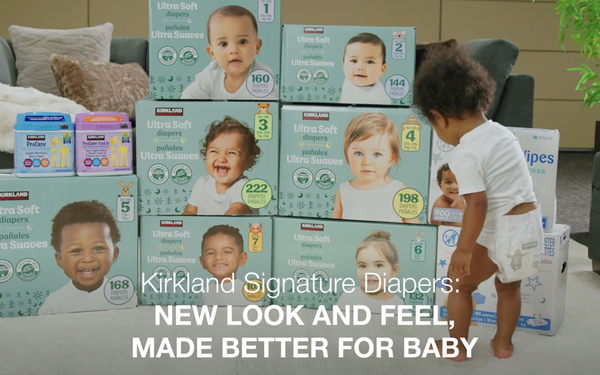
from America’s grocery challenges. Lower-income customers are spending less and making fewer trips. And Kirkland, Costco’s popular private label brand, is losing steam. Kirkland sales increased 3.1% year over year, Numerator reports, and it does best in fresh meat and frozen foods. But branded items grew three times faster than Kirkland items.
Meanwhile, Aldi -- popular for its well-priced but limited assortment and knockoffs of national brands -- keeps looking for ways to capture new fans. The retailer just introduced its first-ever
collection of ready-made meals, in both single-serve ($8 or less) and family size ($15 or less) options.
The Illinois-based retailer says the launch is based on research that 61% of shoppers
place convenience as a top priority.