Microsoft CEO Satya Nadella thinks
everyone needs to move beyond the arguments around AI "slop vs sophistication.” He's betting on getting everyone accustomed to using agents to not only power all types of business needs, but to
adjust to consumer buying habits, even before they do. But what happens when AI becomes commoditized?
Nadella’s first “sn scratchpad” blog entry is about how AI companies need to change how they view AI -- for example, creating a
new concept that evolves the “bicycles for the mind” concept that Steve Jobs used to describe computers as tools in the 1990s.
“What matters is not the power of any
given model, but how people choose to apply it to achieve their goals,” he wrote. “We need to get beyond the arguments of slop vs sophistication and develop a new equilibrium in terms of
our “theory of the mind” that accounts for humans being equipped with these new cognitive tools for how people relate to each other.
advertisement
advertisement
At first, it may be a messy process of
discovery.
Nadella believes models will evolve into systems when it comes to deploying AI in the real world. He describes a world where “we build rich scaffolds that orchestrate multiple
models and agents; account for memory and entitlements; enable rich and safe “tools use.”
This is the engineering sophistication AI companies must continue to build to get value
out of AI in the real world, he wrote.
For the advertising industry, I believe it means immersive ads wrapped in visual technology, agentic agents and out-of-home campaigns that change
the ways that consumers interact with advertising in 2026.
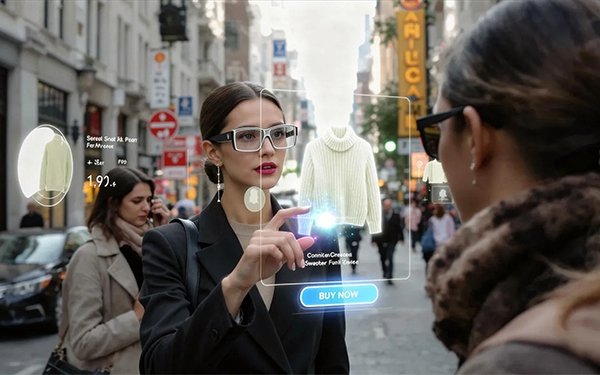
AI-fueled glasses from Google, Meta Platforms, and others will support this shift -- and will become the new advertising unit.
With AI-enabled glasses, consumers can instantly buy a sweater they see someone else wearing on the street.
Meta opened two pop-up stores at the Wynn Las Vegas just prior to CES, with plans
for a more permanent store at the hotel midyear.
Gartner Analyst Nicole Greene believes AI agents will become the dominant interface between brands and customers.
“We
have all this contextual data around what Juliett wants to buy because she sees a sweater in a store and tells the glasses via voice to make the purchase,” she said. “Contextual rich data
within the Google ecosystem will tell the brands, and then agents will make the purchase.”
Improvements in multimodal, reading and processing the information has accelerated voice and
image search in a way “we have not seen consumer behavior adapt to,” she said.
When I asked how brands keep their relationships with consumers, Greene said it will become more
important to build trust with consumers -- including putting their customers at the center of the campaign rather than the products.
The new brand relationship combines human needs and machine
customers, she said. Brands will need to protect their customer data.
Google announced an open-source ad agent protocol (AP2) in December that allows AI agents to securely initiate and
complete payments across different platforms. It introduced specific "intent" and "cart" mandates that let a user tell their glasses that type of transaction to complete.
“We are
starting to see media buying agents,” Greene said, adding that the ad industry has reached the end of the quest for hyper-personalization. Consumers are actively running away from ads and opting
out by paying for subscriptions.
Expect this year to hear and learn more about how agents are accepted into a brand’s culture and workforce to give customers better experiences, she
said.