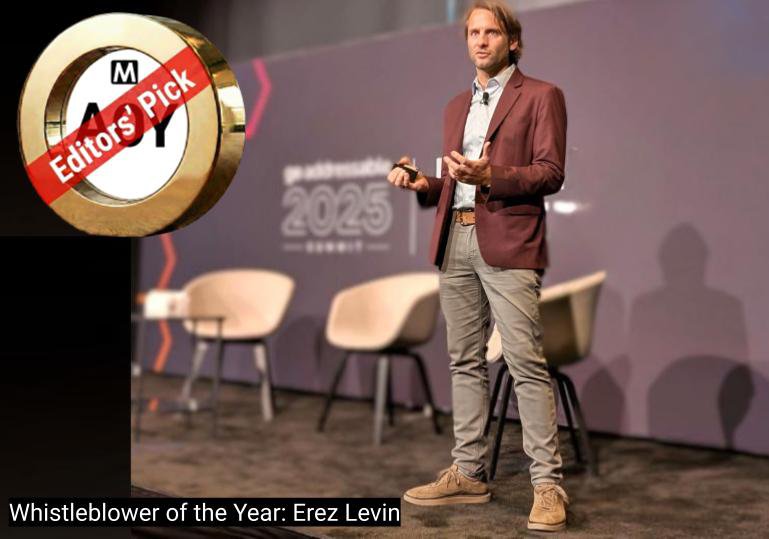
Last November, a former rising star inside Google's ad operations
stood on stage at the Brand Safety Summit in New York City presenting what at first blush might have seemed like a lesson in Econ 101.
In fact, that's what his presentation was entitled, but
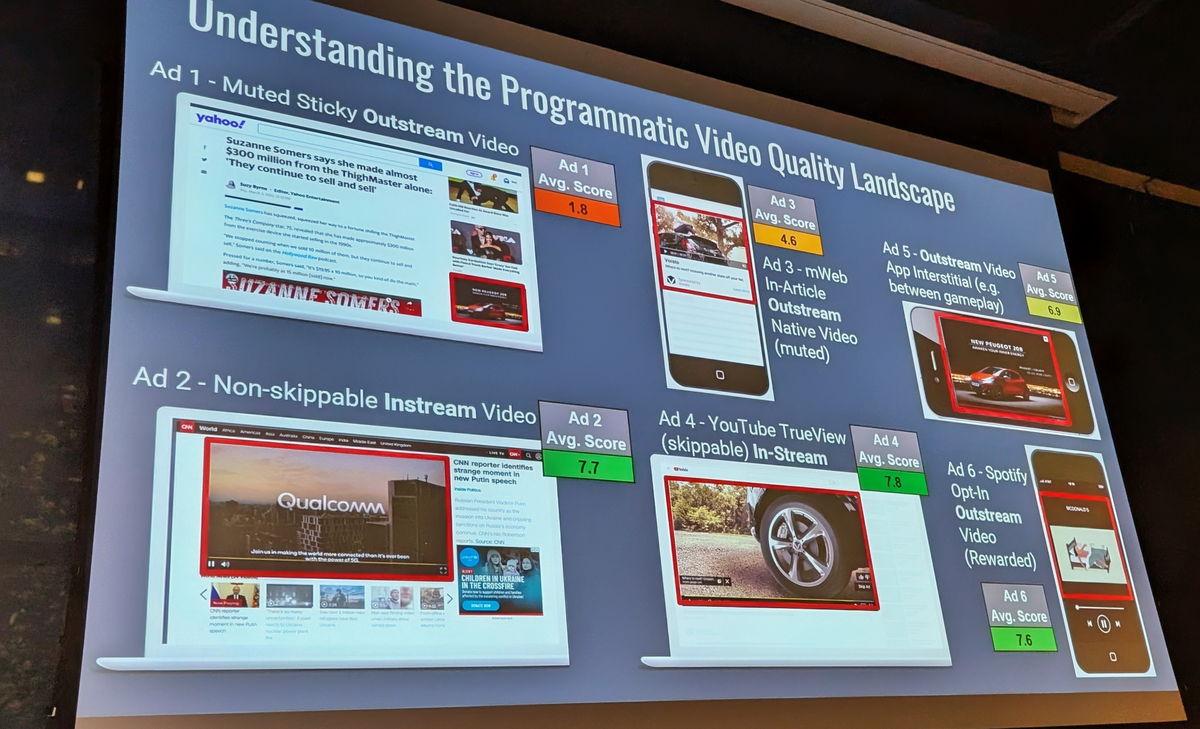
as he pointed to the slide below, the audience of brand marketers, agency execs and ad tech reps could clearly see something was broken.
You can see Levin's entire deck here, but as you can see from the slide, Levin had developed quality scores delineating
the qualitative value of various digital video advertising units -- both "in-stream" and "out-stream" -- indicating wildly different values.
The problem, he said, was that the programmatic
video advertising supply chain -- including his former employer -- treats them all equally in terms of how they are priced to the demand-side of advertisers and agencies and DSPs buying them.
advertisement
advertisement
It was Levin's first public presentation of a case he has
been making since 2023, when serving as Google's representative on an IAB (Interactive Advertising Bureau) committee updating guidelines for valuing the quality of programmatic video ad units set a
new industry standard that has essentially been ignored by both the supply and demand sides -- so far.
Levin doesn't like to go into details about what happened next, but let's just say the
new standard is the reason he no longer works at Google, but has been trying to get the message out -- mainly in posts on his LinkedIn account, in some guest columns in trade publications, in a public
presentation last November at the Brand Safety Summit, as well as a series of interviews with MediaPost that are the reason we are naming him one of our Editors' Picks for an industry "agent of the
year." Specifically, the Whistleblower of the Year.
Levin doesn't like that term, and the editors of MediaPost should qualify it that he's more like a reluctant whistleblower. But in an
industry that historically likes to sweep things under the rug, gravitates to status quo inertia as long as most stakeholders are "making their numbers" and hitting their KPIs, he is part of a rare
breed is is taking a dirty little secret public.
It's a David v. Goliath battle, not just because Google -- and the programmatic video supply chain at large -- are big, powerful players, but
because it's a complex problem that actually has a simple fix, and Levin and his IAB committee teammates already came up with it, even if it's so far being ignored.
"To be considered in-steam
(pre-roll, mid-roll, post-roll), video placement/impressions must be set to "sound on" by default at start," reads the April 2023 update to the IAB's OpenRTB 2.6 guidelines that continue to be
ignored.
In his summit presentation and in interviews with MediaPost (a couple of clips of which can be viewed below), Levin explains why the industry's failure to apply the guideline is
tantamount to "fraud," or something very close to it.
And his mission is to let people know that, but also to encourage the demand-side of advertisers, agencies and DSPs to actually take
advantage of the still-broken marketplace standard by using it to effectively "arbitrage" the market simply by applying their own use of the standard to acquire the most premium portions of
programmatic video supply at what currently is effectively a flat rate.
That, more than anything, Levin says, will force the big suppliers to correct the underlying bias -- simply because it
will cost them market share and margins in what to date has been a goldmine in low-value inventory for them.