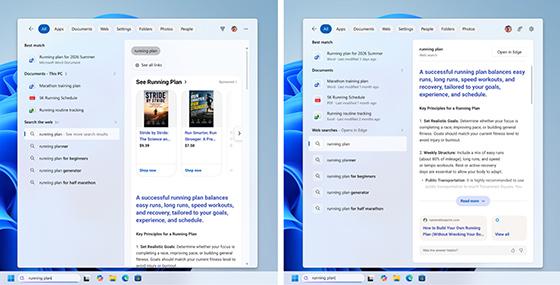
Microsoft finally addressed a major user complaint
by cleaning up the Windows 11 Search Box this week, rolling out a redesign that removes ads from web results and giving Windows Insiders a dedicated setting to turn off Web and Microsoft Store
suggestions.
Windows Insiders are members of an official Microsoft community who get early access to upcoming features and fixes.
When Windows Insiders users type a query,
Windows Search will no longer show promotional content or sponsored product cards at the top of web results, but instead will focus on the most relevant answer.
The Windows Insider Program
officially has more than 18 million members -- up from 1.5 million shortly after the program was announced in December 2014, according to Microsoft.
advertisement
advertisement
Advertisers that use the space to reach developers will lose prime spots.
They will also lose Sponsored cards at the top of local desktop searches and will no longer capture users directly from the operating system taskbar.
In addition, impressions will drop
significantly as millions of users stop seeing these ad placements.
The news, which was downplayed by Microsoft Windows Product Lead Jeff Petty and Bing Search manager Anderson Aiziro in
the blog post, reads: "Promotional content has been removed from web results. Web results show the most relevant answer, instead of first showing related products and promotions, helping search feel
more focused and less distracting."
The redesign of the Windows Search Box available to Windows Insiders began rolling out this week, according to the Windows Insider blog post.
While this update is currently limited to the Windows Insider Experimental channel, which serves as a testing ground for product features, Microsoft intends to roll it out globally to all Windows 11
users later this year.
Advertisers should view this as a controlled feature rollout, which means not all Insiders will see the change right away, as an immediate warning to prepare for a
permanent shift.
In May 2026, The Register reported that Microsoft's "ad products" program for was not successful and faced criticism and challenges.
"The introduction of 'ad
products' — such as promotional content, recommended apps, and web links integrated directly into the Windows user interface — was largely unsuccessful and met with intense user backlash," The
Register reported. "While designed to open new revenue streams, these experiments faced steep resistance from core testers."
One change announced by Microsoft in May
included the end of gradual feature rollouts in the Beta channel.
When a feature is announced in a Beta update, all users will receive it, if they want to experience the update early.
The gradual rollouts are an industry standard that help Microsoft measure the impact before releasing the features more broadly.
Changes include a "calmer" home screen to reduce visual
clutter and make it easier to get back to recent searches quickly, as well as clearer results, and enables those testing new features to be more in control because they can choose whether web and
Microsoft Store suggestions appear alongside local results.