While FIFA and its World Cup event were more than
happy to add more in-game ad messaging via hydration breaks, they stood firm on taking away something key to North American sports branding: brand-name stadium and in-stadium signage.
The
outdoor signage at Levi’s Stadium, for example, in San Francisco was covered and draped so even casual onlookers would not see the brand name -- whether they were interested in the World Cup or
not.
And there could be no mention of the name by TV announcers or any onscreen brand name visuals.
Instead, on-air screen and TV announcers could only refer to the stadiums by their
market or city locations -- for example, San Francisco Bay Area Stadium, or in the case of AT&T Stadium in Texas, as the Dallas Stadium.
The ban also includes in-stadium brand signage
deals from other marketers.
advertisement
advertisement
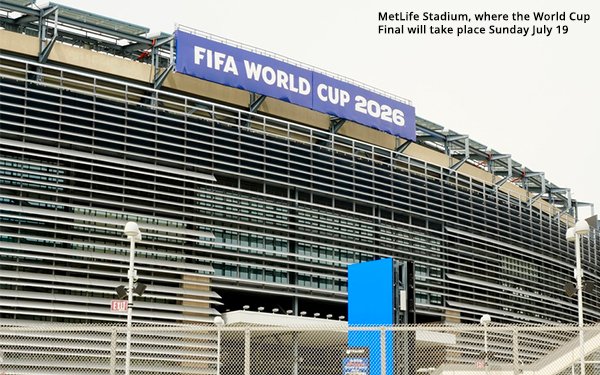
But now that the World Cup is coming to its conclusion this week with the final game featuring Spain facing off against former champion Argentina in the New
York-area MetLife Stadium, brands want a refresh.
In the case of AT&T Stadium, AT&T and the Dallas Cowboys are celebrating the uncovering of the AT&T name with Cowboys owner Jerry
Jones in his helicopter unveiling the AT&T Stadium logo -- a removal of the temporary curtain signage covering.
The stadium recently hosted the semifinal game where Spain beat France
2-0.
The premise is that FIFA exclusive sponsors -- the likes of Adidas, Coca-Cola, Visa and Unilever -- paid millions of dollars for their four-year partnership deals.
In that regard,
Andrew Rohm, professor of marketing at Loyola Marymount University, told NPR:
“So there's this fairness argument that it
would be unfair to allow a brand like Gillette to benefit from stadium exposure for free when a direct competitor, like Unilever, has paid for that exclusivity.
The new social video AT&T
marketing campaign is timed for the return of the new NFL season that gets underway with pre-season and regular season game starting a few weeks.
FIFA chose big market brand-name stadiums,
including Los Angeles (SoFI Stadium), San Francisco (Levi’s Stadium), Dallas (AT&T Stadium), Boston (Gillette Stadium), Atlanta (Mercedes-Benz Stadium), and New York (MetLife Stadium.
These U.S venues -- and Canada and Mexico-- are part of FIFA’s North American deal to host the event.
Many of these deals can cost brands $200 million for a 20-year naming-rights. One
might believe the massive success of the FIFA World Cup was a missed opportunity for those brands.
Still, brands went with the flow. Levi’s posted videos of the shrouded stadium entrance
-- a white-tarp logo entrance with a "Nobody's Gonna Know" TikTok audio playing with captions such as: "Welcoming the world to the beautiful [redacted] stadium!"
Also, Levi's produced and sold
white limited-edition T-shirts featuring the redacted white-tarp logo.
The Gillette company posted a computer-generated image of its logo on the Boston Stadium covered in shaving cream.
Still, what should other clean-shaven marketers who didn’t offer up alternative, go-with-the-flow campaigns do now?
How to even the score?