Friends rant about carbon zero as they move away from brands
that do not protect the environment and data centers that require too much electricity, water, land and other natural resources. But many advertisers still turn a blind eye in the hope that all this
criticism will just go away.
Maybe it's just the friends I keep, but I don't think the feeling will go away anytime soon unless companies begin making a major effort to implement
change. Consumers want bands to make a commitment and stick to it.
Environmental footprints have become part of business strategies for some, but not for all. And many marketers have
found sustainability and measurement blind spots. Media buyers are asking more questions about how to improve their brand's carbon footprint, but perhaps not enough.
advertisement
advertisement
A new report from
51toCarbonZero, a climate technology and advisory firm, found that 88% of marketers believe technology has increased emissions and that this will continue, but less than half completely track its
impact. That tech includes things like artificial intelligence (AI) for business services like ad serving.
51toCarbonZero clients include Havas, Renault Trucks, Innovid, Magnit, MiQ, Nielsen
and others, according to the company’s website.
Insights from the survey conducted by Censuswide in June 2026 come from about 200 senior brand marketers and C-suite
marketers in the United Kingdom and United States.
Fifty-one percent of U.S. marketers participating in the survey perceive a significant uptick in emissions from AI compared with 32% of
U.K.
Marketers believe the price tag of AI in addition to the environmental factor are perceived as concerning and stifling.
Eighty-eight percent say that AI is pushing up operational
costs, while 35% say it is doing this to a substantial degree. Th
The report also found that 88% of respondents said AI is increasing their organization’s carbon footprint, while the
same proportion said it is raising operational costs.
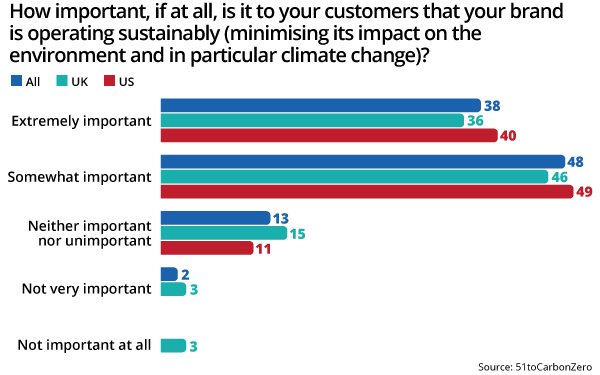
When asked about how important it is that a brand operates sustainably to customers, 82% of U.K. respondents said sustainability matters
to their customers, compared with 89% of U.S. respondents.
Some 85% of survey respondents say they are making significant or moderate progress toward reducing carbon emissions, while half say
their organizations have increased stability commitments in 2026. Only 4% say it will be reduced.
The report suggests that brands need better data, clear governance and more integrated
decisions to close the gap between measurement, awareness and action.