The growing “creator" factor on premium
streaming platforms -- including Netflix, Disney+ and Fox One -- is ruffling the king of that business, YouTube.
Formerly known by the less interesting moniker -- user-generated content -- the
big Google platform is looking to keep its big share of the creator environment in-house.
Some big producing creators have moved to Netflix -- for example, on a non-exclusive basis.
This has led YouTube executives to tell those creators they could receive less promotion if not losing their brand deals overall, according to reports.
This might also include being pulled
from YouTube’s top, most brand-safe programming platform -- YouTube Preferred.
This is where Netflix comes in.
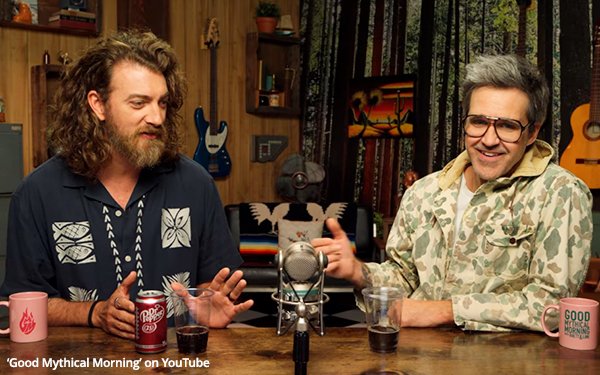
If creator content from top sites including "Good Mythical
Morning," Mark Rober, "Therapuss," "Stokes Twins," "Salish and Jordan Matter," "Chicken Shop Date" and "Sam and Colby" are now being placed on Netflix alongside to big TV content such as
“Stranger Things” and big NFL games, all that can give those creators better access to premium advertising brands, according to LightShed Partners.
advertisement
advertisement
Why? Brand safety comes into
play.
YouTube isn’t all that happy about this -- although it still pulls in a soaring $40 billion a year in advertising revenue versus around a still small, but growing $3 billion a year
for Netflix.
For YouTube -- even with its viewing share now largely coming on the big screen -- still gets dinged by traditionalists who say it isn’t "television" -- that its
foundational, user-generated and creator roots are still key.
Perhaps even more galling to YouTube is that it has a leading 14.2% share of U.S. television viewing (July 2026), when it comes to
Nielsen’s Media Distributor Gauge. And it continues to grow.
The descriptor “premium” attached to streamers? That is still around. At the same time, we can throw around the phrase
"professionally produced content," usually attached to big time Hollywood-based movie studios.
Perhaps we need new definitions for generalizing about that content. At the same time, maybe we
also need to be better, from an advertiser perspective, what is -- and isn’t -- brand safe.