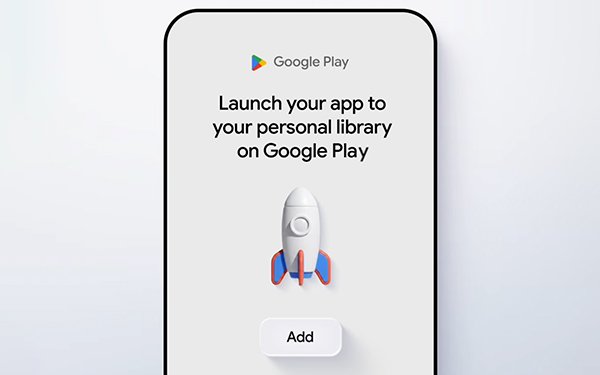
Google will now allow
anyone 18 years of age and up to publish "vibe-coded" Android apps in a private section on the Play Store.
The apps must be created through Google AI Studio, a web-based platform for
prototyping apps and creating media with the tech giant’s various AI models.
Vibe coders are anyone, even without a paid developer account, who uses natural language to ask AI to
generate software code.
Using Google AI Studio, anyone can vibe code a custom Android app. Since many of these apps start out as personal projects, through Google Play the apps can be launched
on personal devices.
This means your creations stay private, secure, and separate from the public store catalog. Standard Google accounts are required, but not developer accounts. This starts
rolling out today to select markets, including the U.S., for users 18 and over.
advertisement
advertisement
If it doesn't exist, vibe code it, Google says in a video posts online Tuesday. The
personal apps won’t show up in Google Play’s search or listing pages, and won’t be shared with anyone except for the app’s creator.
Will brands need agencies to build apps? The new update marks the beginning of the hyper-personalized software era, shifting how brands, agencies, and independent
creators approach the mobile ecosystem.
While the immediate release targets entirely private, single-user apps via a new "Personal Library" also announced for Google Play today, the company has already confirmed that private sharing with friends and
family will launch in the coming months.
Google Play allows up to six family members to share content, a capability originally
established through the
launch of the Family Library feature across multiple countries. While users manage shared media under this model, individuals also can use Personal Library
tools to catalog books or track reading status--all private. The tool will scale to allow people to publicly distribute the apps to others.
It is intended for users who eventually want to share their vibe-coded apps beyond a small
circle. In this case, Google will provide an onboarding pathway to transition the apps onto a standard public developer profile, subjecting them to traditional Play Store review
guidelines.
Scaling an app will require specific safety and security guidelines Google enforces during the professional review process because vibe-coded apps are written
by AI agents rather than engineers.
Vibe-coded apps frequently trigger specific security and policy flags, according to Android developers.
Opinions are mixed among developers on
groups like the Vibe Coding AI Facebook Community regarding whether AI agents can build secure
data structures out of the box, making human oversight critical before submission.
Vibe-coded apps
are not automatically insecure, but the danger comes when someone ships something without understanding certain perimeters such as
Authentication & Authorization, database
permissions, secrets, validation, APIs and more.
AI can write secure code, but the person directing it still needs to always know and identify what to check and how to verify it.