Artificial intelligence (AI) continues to raise ethical
considerations for those leading advancements in the technology.
This week, two high-profile executives left companies that had attempted to make an impact in AI, seeking something in the real
world.
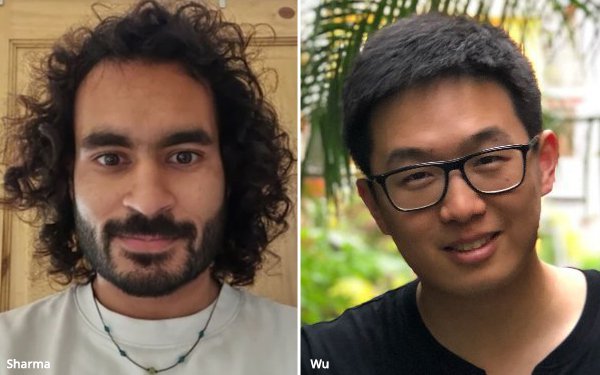
Mrinank Sharma, the lead of Anthropic’s safeguards research team, resigned from the company just three years after joining in 2023.
“Today is my last day at
Anthropic,” he wrote on the social media platform X. “I resigned.”
While Sharma holds a Doctorate of Philosophy in machine learning from Oxford, and a Masters of Engineering
from Cambridge, he shares a love of poetry — specifically Rumi, Rilke, and William Stafford. His note on the social-media platform X explained his decision.
Sharma’s
resignation comes as questions about ethical alignment are heightened across the industry.
advertisement
advertisement
He pointed in his note to a perceived disconnect between the company’s public stance on AI
safety and internal practices, suggesting pressures often forced employees to compromise on their personal core values.
He also pointed to a world is in “peril,” pointing to
crises, but not limited to AI risk.
He plans to explore a degree in poetry, and expressed the belief that tackling such existential questions requires more than technical work such as wisdom,
integrity, and deeper reflection.Sharma is not the only AI expert who has left AI companies beginning to make an impact in the field. Tony Wu, one of the co-founders of xAI, announced his resignation
on X late Monday.
“This company — and the family we became — will stay with me forever,” Wu wrote in a post. “I will deeply miss the people, the war
rooms, and all those battles we have fought together.”
Despite AI being an “era with full possibilities,” describing a “small team armed with AI technology” that
could “move mountains and redefine what’s possible,” he felt it time to move on.
Several other founding members of xAI — Igor Babuschkin, Kyle Kosic, Christian Szegedy
and Greg Yang — also have departed the company.
Recently acquired by one of Elon Musk's other companies, SpaceX, Musk said space will become the lowest cost way to generate
computing power for AI.
In response to a post on X, Musk wrote, “There are very few regretted departures. And we are accelerating faster than other AI organizations on Earth, despite
being a much smaller team.”
A lesser-known company, Thinking Machines Lab, lost three of its six original
co-founders. After raising $1 billion in a seed round funding.
Some have returned, like Barret Zoph, former OpenAI research lead, and another co-founder reportedly returned to
OpenAI in January 2026.