Vidhya Srinivasan, vice president and general
manager of ads & commerce at Google, put search and agentic commerce at the top of the company's list for changes in 2026, as Anthropic and OpenAI attempt to balance revenue gains against
credibility and safety.
In her third annual letter, Srinivasan outlines core strategies such as how artificial intelligence (AI) will change shopping and disjointed shopping journeys, as well
as advertising and how to address the change in 2026.
“We aren't just bringing ads to AI experiences in Search; we are reinventing what an ad is,” Srinivasan wrote in a blog
post.
The shift is turning Search into a tool where ads inspire and answer questions simultaneously.
For example, AI Mode offers businesses opportunities to fit into conversations.
Google has spent the past few years testing new advertising formats to make this happen. Tests show it surfaces organic shopping recommendations based on what is most relevant to a query.
advertisement
advertisement
Now, Google has been testing a new advertising format to showcase retailers that offer those products, clearly marked as sponsored.
The new format helps shoppers easily find buying options,
and offers retailers the opportunity to show up in these key moments of consideration.
Similar formats are being tested in categories beyond retail such as travel, to help people find relevant
products and services.
Aside from removing repetitive tasks and slow processes for marketers, Google will work with the industry to build the "blocks" needed to make agentic commerce
seamless and secure.
UCP standardizes the ways businesses connect with AI agents across the entire shopping journey, including critical steps that enable secure digital identity and
payments.
In the weeks following the launch, citing companies it works with, Google said the protocols improve shopping experiences.
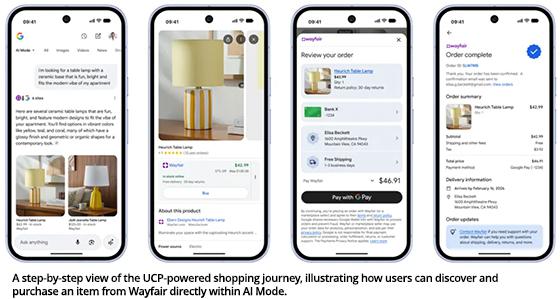
UCP-powered checkout is rolling out now
in the U.S., enabling shoppers to buy items from Etsy and Wayfair in AI Mode in Search and the Gemini app, soon followed by Shopify, Target, and Walmart.
Influence will have an impact on
YouTube, meaning as the shift from using Google’s video platform by creators for brand awareness to using them in commerce model where AI agents handle the entire transaction, from
discovery to checkout.
This year the goal to build stronger connections between brands and creators, and use AI to better understand content and audiences to instantly match brands with
creator communities. This turns creators’ organic influence into real business impact.
Since search is no longer limited to keywords, people are brainstorming, snapping photos and asking
questions when looking for products and services.