Google will add AI-generated voiceover
capabilities to Performance Max video ads using advertiser headlines and descriptions, but there is an opt-out deadline for marketers working for brands that do not want to participate.
Jordan
Fry, CEO at the Google and Pinterest media-buying service RevAmp, shared an email received Monday from Google in a LinkedIn post that describes how Google will pull from the advertisers headlines and
descriptions to generate an AI voiceover from the text.
The technology will layer it onto applicable existing videos in Performance Max and save it as a new asset. Google will trigger audio
only if the video does not contain an existing voice feature, including a human narrator, branded audio, or other spoken elements. This means the technology looks for silent or music-only
videos.
advertisement
advertisement
Fry wrote that advertisers have until March 20, to opt-out of the video enhancement controls.
Georgi Zayakov, a PPC influencer, pointed out in his own LinkedIn post that "if all advertisers run the same voice it won’t be good," after Manuel Arrufat, founder of Dolnai, wrote,
"for agencies managing large ad portfolios, these AI-generated assets could increase creative testing volume, but they’ll still
need human oversight to ensure messaging stays on brand." Dolnai helps advertisers drive performance from Google Ads.
The voice feature is scheduled to activate
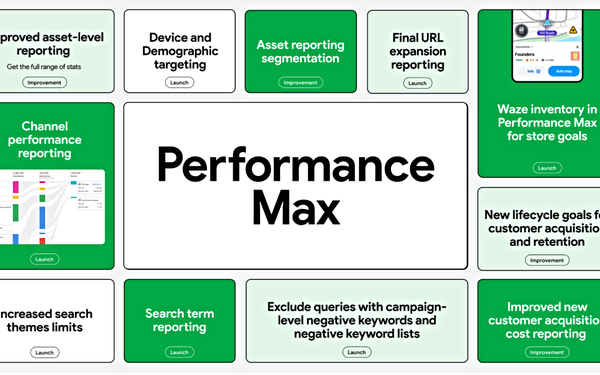
automatically next week as Google ramps up automation supported by artificial intelligence (AI) in Performance Max, which budgets allocating ad dollars across Search, YouTube, Display, Discover, Maps,
and Gmail.
Meta has a similar AI-generated narration feature for ad voiceovers, but it differs to Google's in how it's triggered and controlled.
Google Performance Max's trigger automatically generates a voiceover by pulling text directly from the
ad's headlines and descriptions if the video has no audio. Meta requires the advertiser to manually select the voiceover tool or "Advantage+ Creative" enhancements during the ad setup or Reels creation process.
Meta appears to focus on "AI Dubbing," which can clone an original speaker’s voice to translate it into another language
while syncing lip movements.
Marketers cannot use their own voice. The technology used, called "speech synthesis," is done by using Google's latest large language models (LLMs), then
generative AI converts the text into a realistic spoken audio track.
While
Google allows for precise start-time settings for up to five different voiceover messages within one video, Meta emphasizes persona-based generation, allowing marketers to choose a "voice persona" that matches your specific brand tone, according to the companies'
websites.
Google originally offered a manual tool, but this enhancement feature is fully automated. Previously, marketers had to manually type a
script and select a voice in the Asset Library. Now, Google AI automatically extracts
text from your existing headlines and descriptions to create the narration. It is also enabled by default in Performance Max campaigns.