Major companies are rewiring for
artificial intelligence (AI) as part of a larger shift from chatbots toward more capable AI agentic tools that can complete complex, multi-step tasks across apps, files and work environments.
The move raises concerns about how much access and authority these agents should have inside corporate and media-planning environments.
Google’s AI agent "Gemini Spark" launched
on the Apple Mac for Gemini macOS this week.
Soon, users will be able to assign a multi-step task to Gemini Spark from their phone, such as asking it to find a specific performance or media
report, pull a total revenue number, and email it to themselves — and allow it to execute the work on their computer while away.
The macOS launch allows Google to better compete with
desktop AI agents like Claude Desktop, Microsoft’s Copilot, OpenClaw and others, because it can work with files on the computer, and soon it will be able to handle remote tasks.
advertisement
advertisement
Google
also is rolling out support for custom Model Context Protocol (MCP), which can be customized to connect favorite apps directly into Spark.
Gemini Spark for macOS in beta is available today
only to Google AI Ultra subscribers in the U.S.
When Elon Musk created X, rebranded from Twitter, his goal was to create a super app with many connecting parts that would encompass a company
seeped in artificial intelligence (AI), just as OpenAI now wants to create a super app.
OpenAI, the company Musk reluctantly left to CEO Sam Altman and board members, told the Financial
Times in early June that it intends to transform its chatbot into a “superapp” that combines coding tools and AI agents.
Eventually adding products would generate more revenue
than ads and subscriptions, executives said.
“Chat is dead,” one senior OpenAI employee told FT.
OpenAI embarked on this change on the premise of moving toward AI
agents, which can perform multiple tasks for users from booking travel to organizing calendars.
This will be a more valuable product than the chatbot, although products like Codex can write
code and create software from simple user instructions.
Earlier this year, Anthropic made the decision to make AI into a deep-thinking technology, and moved toward professional work
rather than putting ads in its chatbot.
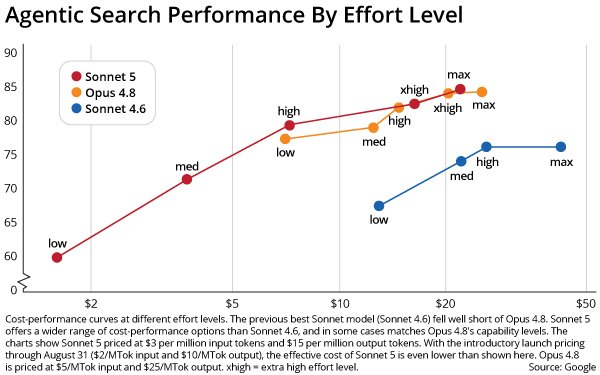
On Tuesday, it launched "Claude Sonnet 5," calling it the “most agentic Sonnet model yet.”
The newest model can make plans, use
tools like browsers and terminals, and run autonomously at a level that just a few months ago required larger and more expensive models.
Early feedback from Claude Sonnet 5 testers described
how Anthropic’s model finishes complex tasks where previous Sonnet models would stop short, and how this newer model checks its own output without being asked.
The industry will see the
same from OpenAI in its effort to make agentic agents more capable than chatbots.
This strategy has already begun to roll out, initially appearing as changes to ChatGPT’s website and
mobile apps, encouraging customers toward using coding, image-generation and apps from external partners.
The changes highlight how OpenAI’s strategy continues to move closer to
Anthropic’s -- with a focus on developing products for businesses -- and will remain at the heart of its pitch to investors as it moves toward an initial public offering.
Business
includes how the advertising industry supports connections with business partners and consumers.
Anthropic’s model is capable enough that Amazon Web Services made Claude Sonnet 5
available on Amazon Bedrock this week, enabling developers to build within their existing AWS environments, maintain enterprise security and regional data residency, and scale inference.
In
late June 2026, Adobe was added to several Russell value and defensive benchmarks, which are stock market indexes managed by FTSE Russell that group together stable, large-cap companies. And we cannot
forget that Alphabet, Google’s parent company, was added to the Dow Jones
Industrial Average for its influence in AI.
Will agents have too many privileges? Agentic technology can authenticate, receive permissions, call APIs, write code, trigger workflows, query
databases, and act across production environments.
Does AI need a kill switch?