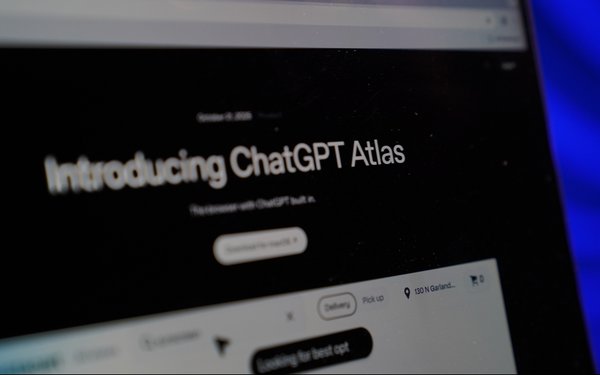
Web browsers are becoming obsolete as agentic services kick in and
artificial intelligence (AI) engines answer long queries.
On Thursday, OpenAI announced it would shutter its Atlas browser and move the agentic capabilities into ChatGPT and
Codex.
"We are building on what we learned from Atlas to support a more capable browser experience in ChatGPT, including multiple tabs, downloads, improved navigation, account login support,
and other browser improvements where available," OpenAI described in a help page on its website.
Since Atlas is scheduled to stop working on August 9, 2026, the company suggests exporting or
saving any important data related to the browser, including bookmarks and pages.
After that date, Atlas may no longer open, browse, or support browser-based agentic workflows.
The move
comes a few months after OpenAI’s CEO of applications Fidji Simo told employees to cut back on side
projects to focus more on its core business. That led OpenAI to shutter its AI video-generation tool Sora.
advertisement
advertisement
Simo also today stepped down as CEO of applications to begin a role as a part-time advisor, after discovering the road to recovery from a
chronic illness would take more time than first anticipated.
Amidst the changes at OpenAI and AI wars across the industry, the browser has become an evolving piece of
internet service as companies attempt to determine how it will become more helpful and relevant in an agentic commerce world.
Perplexity launched Comet, Google updated Chrome with AI
capabilities, and Microsoft updated Edge with new AI-powered Copilot features.
OpenAI also said today it will launch a “ChatGPT Chrome extension” that gives it access to the
context of the page a person views.
The shift to a Chrome extension changes how the AI interacts with what the user views.
ChatGPT has long said it could not see what information is in
the chat, but the updated ChatGPT Chrome extension runs in Chrome's sidebar. It is
designed to access the user’s active webpage context to summarize articles, answer questions about the text, or pull data without the user needing to copy and paste the content.
When
given permission, the extension can perform multi-step web tasks such as researching across authenticated websites or validating information in the Chrome sidebar. These tasks do compete with Google
Gemini Side Panel.
These capabilities to the Chrome extension build on what OpenAI learned from Atlas and from the users who helped the company’s developers understand how agentic tools
can make browser-based work more useful.
OpenAI also announced today GPT-5.6, which will become the new preferred model in Microsoft 365 Copilot — in Word, Excel, PowerPoint, Chat and
Cowork. For Microsoft 365 customers, the update brings OpenAI's latest model series into productivity tools.
GPT-5.6 is OpenAI’s latest flagship model series, which delivers more useful
work from every token, with stronger performance per dollar and on demand capability for the most complex tasks.