Each time a brand's employees or their agency representative
uses a public or vendor-hosted AI tool, they accidentally give away company secrets, destroying what could have been proprietary data or a competitive advantage.
This happens when someone
posts confidential financial sheets, source code, or strategy drafts into the prompt box to request a summary or more information. It can also occur when someone asks AI to explain a specific issue
that the company is facing, such as how to fix a bug.
Imagine a brand hiring an outside agency to plan a campaign to improve performance and branding. Normally, the agency rep would present an
idea and keep the brand’s data private.
When AI is asked to do the same task, it takes the brand’s internal secrets and teaches other agency reps to do that task -- often among the
brand’s competitors.
advertisement
advertisement
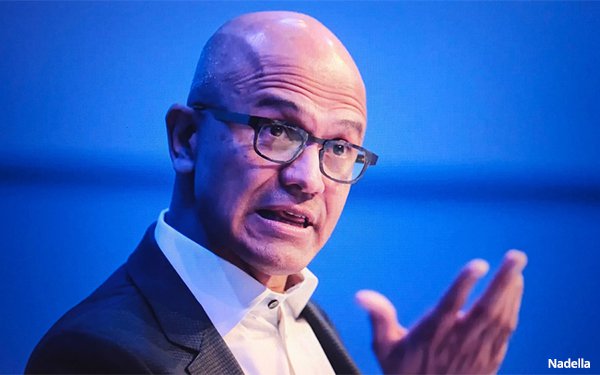
AI has flipped a classic economic theory on its head, creating a new risk for consumers regarding data privacy and intellectual property, according to Satya Nadella,
Microsoft CEO.
Nadella’s argument -- "The Reverse Information Paradox," published in a post on
X -- has little to do directly with AI, but points to an older idea from economics from Nobel Prize-winning economist Kenneth Arrow related to information.
“Its value for the purchaser is not known until he has the information, but then he has in
effect acquired it without cost.” Nadella wrote, citing Arrow’s work. “In Arrow’s ‘Information Paradox,’ the seller risks giving away knowledge in order to sell
it.”
Nadella explains that AI creates a “reverse problem,” where the buyer risks giving away knowledge to use what they bought.
“You essentially pay for
intelligence twice, once with money, and again with something even more valuable: the proprietary knowledge you must reveal to make that intelligence useful,” Nadella wrote. “The better
you want the model to perform, the more of that knowledge you have to feed it!”
The information becomes skewed and the seller learns more about the company and why it purchased the
items, while the purchaser has little knowledge about the seller.
AI requires more data protection -- more than patent and intellectual property safeguards.
In a revealing statement
about brand secrets, Nedella wrote that “models learn from 'exhaust,' the prompts people write, the tools agents use, and especially the corrections people make when the model is
wrong.”
He writes that this is the type of knowledge a competitor could never buy, and the kind that leaks almost imperceptibly: trace by trace, correction by correction, eval by
eval.”
For brands that wish to keep their trade secrets or campaign secrets, well, secret, the most important thing to note in Nadella’s post comes midway.
“In
consuming intelligence, you are creating intelligence,” Nadella wrote. “And what you create should belong to you. This is your particular intelligence, in Hayek's sense: the knowledge of
time, place, and circumstance that no one else can hold. It knows what you think, what you value, and how you measure success.”