At an ANA board of directors meeting a while back, there was a discussion of current ANA
initiatives focused on media.
At the time, those included cross-media measurement, media sustainability, principal media, programmatic media, and retail media.
At the end of the
discussion, the ANA asked the board, “Are there other media issues that we should focus on?”
A board member quickly responded, “Influencer marketing! Please do for influencer
marketing what you did for programmatic media. That is, identify areas of waste and then ways for marketers to address those issues.”
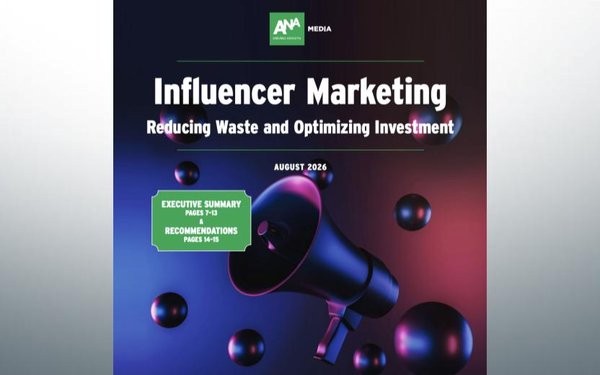
Thus began the project that has resulted in the new
paper, “Influencer Marketing: Reducing Waste and Optimizing Investment.”
advertisement
advertisement
There are interesting parallels between influencer marketing and programmatic media.
Both can be complex. There can be multiple intermediaries for both, between the marketer and
consumer.
In programmatic, there are agencies, SSPs, DSPs, data providers, etc.
In influencer marketing, intermediaries could include agencies, talent representatives, technology
providers, creator management organizations, production partners, and then the influencers themselves.
While these intermediaries can provide valuable expertise and operational support, each
additional layer can introduce costs, reduce transparency, and slow decision-making.
Speaking of transparency, that can be a concern in both influencer marketing and
programmatic media.
Often marketers have limited visibility into how fees are allocated throughout the creator ecosystem, including into agency compensation structures, creator fees, markups,
technology costs, and other financial arrangements.
That is similar to the limited visibility marketers have in the programmatic media supply chain.
In influencer marketing, when
multiple intermediaries are involved, understanding how the money flows can be difficult.
Lack of transparency can make it challenging to evaluate efficiency, compare alternatives and identify
opportunities for optimization.
These challenges can be further compounded when marketers are not directly involved in creator negotiations or have limited visibility into the financial
arrangements supporting creator partnerships.
There are parallels between how influencer marketing can be bought from agencies and how media -- not just programmatic -- can be
purchased, with agencies acting as principals.
Historically, an agency acted as an agent/fiduciary for its clients, buying media transparently and fully disclosing the cost of the media from
the seller.
Now, with principal media, the agency acquires the media with its own funds and then resells that media to clients without disclosing the original purchase price. Clients therefore
don't know the agency markup/profit or whether the recommended media is truly in their best interests.
Today, in influencer marketing, many of the compensation arrangements are not
transparent. The client does not know the allocation between fees paid to the influencer talent and fees paid to the agency.
Therefore, as in principal media, the client does not know the
agency markup/profit.
Agencies may have a financial interest in promoting certain influencers, creating a conflict of interest. Independent vetting can provide an objective
perspective and help organizations evaluate creators without the influence of external financial incentives.
With independent vetting, agencies are not grading their own homework. A parallel
here is the use of outside ad verification companies in programmatic advertising to identify invalid traffic, non-viewable impressions, and brand safety, rather than using an agency.
Organizations that invest in robust vetting processes are generally better positioned to avoid costly mistakes while improving the quality and effectiveness of their creator partnerships.
There are 37 total recommendations in the new influencer marketing report. These three, in particular, provide parallels to programmatic advertising:
Know all your external partners -- more layers leads to higher risk of inefficiency, increased costs, and reduced transparency
Use independent vetting
Marketers who value fee transparency should ask
for it up front