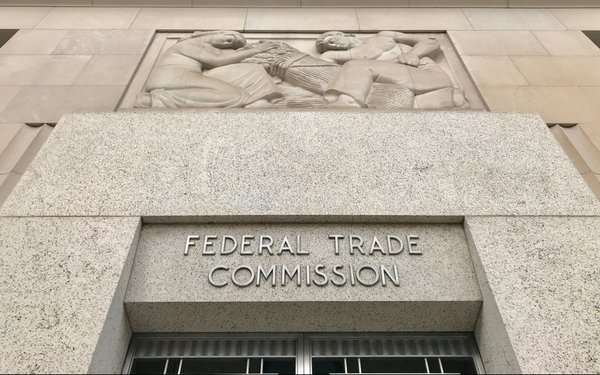
The Federal Trade Commission on Thursday took a
first step toward crafting regulations that, if enacted, could require online platforms to take steps to combat fraudulent ads by scammers who impersonate businesses and government agencies.
"Today’s impersonation scams are no longer the work of isolated con artists; they are sophisticated, highly engineered operations powered by the same advertising and targeting
tools that platforms sell to legitimate businesses," Christopher Mufarrige, director of the FTC’s Bureau of Consumer Protection, stated.
The agency said in an "advanced notice of proposed rulemaking" that these so-called impersonation scams "have been amplified by
search engine, social media, and other digital marketplace platforms that profit from optimizing online ads for third parties, regardless of whether the third parties are legitimate, while avoiding
the social cost of the impersonation scams furthered by such ad optimization."
advertisement
advertisement
The agency noted that Reuters alleged in a recent report that Meta expected to earn around 10% of its 2024
revenue -- amounting to around $16 billion -- from ads for scams, illegal gambling and the sale of banned goods.
The FTC is now seeking comment on whether to move forward with a rulemaking
that could result in regulations "that would force such platforms to internalize the cost of optimizing fraudulent ads."
"Platforms have revolutionized how advertisers reach
consumers by offering ad-optimization tools and services that enhance an ad’s effectiveness in engaging consumers," the agency writes.
"These tools and services can
develop ad content, including through ad copy creation, image and video generation, ad enhancements, and product listing creation or enhancement," the FTC adds. "They can also use detailed consumer
data -- including the consumer’s demographic profile, websites visited, and search history -- to tailor the content and delivery of advertisements."
The agency is asking for comments on
a host of potential rules -- including one that would require platforms to verify users' identities before offering optimization tools and services, and one that would require platforms to "screen
and/or monitor for impersonation ads."
It's not clear how much power the FTC has to regulate platforms' interactions with advertisers given Section 230 of the Communications
Decency Act. That law generally provides that web publishers aren't liable for material uploaded by third parties (including advertisers), but some courts have said Section 230 doesn't protect
publishers that help develop the material.
The FTC said in its notice that the applicability of Section 230 "involves a fact-intensive inquiry."
"To the
extent platform conduct falls outside section 230 and is unfair or deceptive, the Commission may exercise its authority to protect consumers from such conduct," the agency writes.