If advertisers want to get a sneak peek at the future, they only
need to look as far as Google DeepMind's multimodal AI model for on-device search introduced today.
Think of this new AI model as a smart, private organizer that lives directly on a person's
smartphone, rather than in the cloud. It allows the phone to look at a text message, an image, a video, or a voice memo and understand how all connect, without ever sending that data to the internet
or a cloud.
Today, advertisers track consumer online clicks to determine what they like. This technology keeps data locked on the person's phone, similar to the way Apple Intelligence
works.
Rather than sending everything to the internet, Apple Intelligence is built for on-device processing. It securely looks at the personal context, settings, and preferences stored
directly on the iPhone to help users write, summarize notifications, and answer questions.
advertisement
advertisement
In the future, more apps may look at in a person's phone like photos or videos and show relevant ads
like dog food or travel deals entirely behind the scenes.
Advertisers will never see private photos, but their ads will still find the relevant audience.
People may begin to spend less
time searching the public internet, and attention may shift more toward personalized on-device AI.
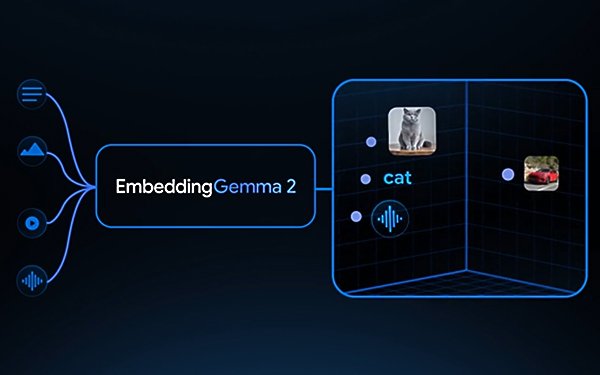
On Tuesday, Google DeepMind launched "EmbeddingGemma 2," which expands beyond text to combine
code, images, video, and audio in one space on a phone for the Gemma 4 architecture and released under a commercially permissive Apache 2.0 license.
This means that the picture and sound of a
cat and the word "cat" are all mapped together. With the one model, developers and marketers can build search, retrieval, classification, and clustering for all different types of data.
The
model can help find a specific video clip from a voice memo, or search through hours of audio recordings based on a text query -- all processed by one multimodal model in the phone.
EmbeddingGemma 2 also searches within videos. If someone searches for "blowing out candles," it will find the precise moment in the specific video being searched for.
Just like Apple
Intelligence relies on the iPhone's local processor to keep data hidden from the cloud and on the phone, Google DeepMind’s model is engineered for on-device processing that prioritizes
privacy.
It presents a major shift for advertisers even today, automating the ability to pull photos, videos and precise voice context that can no longer be easily harvested and sent to cloud
servers for profiling. Advertisers must completely change how and where they understand intent -- and they are doing it with AI.
Automation has become a major focus for Google. On September
12, Google will launch automated promotions for Search and Performance Max campaigns by automatically identifying when
coupons on a brand's website will link to assets based on the location of those searching and apply them directly to the campaign.
A redditor wrote: "I can't think of an instance where I need
Google to automatically apply promotions without our review or consent," cautioning that it might "dredge up some random content from an orphan page."
A letter sent to advertisers from Google
reads: "We are automatically opting you in to ensure you benefit from this new functionality," but to turn it off navigate to account-level automated assets setting, find Automated Promotions and
select "Off."