The truth is, more often
than not, we would rather avoid ads than see them. We pay for premium streaming services, so we don’t have to put up with commercials. We hit the skip button on online video ads after the
requisite six seconds, (70% of viewable ad impressions are never actually viewed).
But once a year, on Super Sunday, that dynamic is turned upside down. We look forward to watching good old
advertising. In fact, 42% of us watch primarily for the commercials - and advertising ranks as the third most popular aspect of the broadcast (ahead of the half-time show).
It may
seem like a paradox that something we proactively avoid most of the time is something we actively love once a year, but maybe we shouldn’t be too surprised. In truth, most advertising is not
loveable, it’s intrusive, it’s not fun, and it’s not helpful.
advertisement
advertisement
But once a year, yep, on Super Bowl Sunday, the advertising is great, it’s fun, it’s entertaining,
it’s something we want to comment on and talk to friends about. It’s creative.
Perhaps what should be surprising is that marketers and brand managers don’t
look to that example of a cultural embrace of advertising and ask themselves why they don’t encourage more of it. Because what the Super Bowl does best is highlight the compounding
economic advantage of being more creative in our marketing.
Recently, Andrew Tindall of ad researcher System1 published a paper in conjunction with Effie Worldwide called "The Creative Dividend." The study found the most creative campaigns generated a profit multiple of 21x that of the least creative
campaigns.
The finding is entirely consistent with an earlier Nielsen/NCS study showing creative quality accounts for 47-49% of a brand’s sales lift from advertising.
So,
creativity is a profit multiplier and a sales generator, but even that is only half the story. Because creativity doesn’t just drive profit, it generates attention, it drives coverage and
ultimately, it creates cultural currency.
Last year, Super Bowl LIX averaged a record 127 million viewers – the largest of any broadcast in the history of U.S. television.
But the in-game television audience was dwarfed by the engagement generated in earned and social media.
The event drove 2.83 billion social-media engagements, 683 million views on hashtag
videos, and a total social a total social reach equivalent to the entire population of planet Earth, according to at least one source.
CeraVe alone generated 15 billion earned impressions before it’s commercial even aired. And those
views, impressions, comments, shares, and likes were all driven by the kind of entertaining, provocative creativity that can spark a cultural conversation.
The commercial impact of
that has also been documented. "The Earned Effect" study from Weber Shandwick and the U.K.'s IPA (Institute of Practitioners in Advertising) demonstrated that "culturally salient" campaigns -- those
that earn sustained coverage and social conversation -- are 2.6x more likely to drive large profit growth and 53% more likely to create other very large business effects, including gains in market
share and customer retention.
The study also found those campaigns invested materially less in paid search because the cultural conversation they generated produced its own, organic, search
effect.
We’re living in an "Attention Economy" where goods are abundant, and attention is the scarce resource. Creativity is a mechanism to capture that attention.
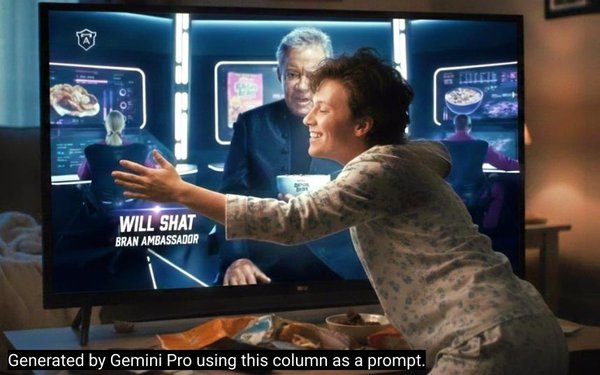
I’m writing this before the Big Game, but I can almost guarantee our attention will be captured by the antics of “Will Shat” – the "Bran Ambassador" for Kellogg's Raisin
Bran cereal, for example. And I think we’ll be talking a lot about Anthropic’s Claude and its beautifully portrayed stance against advertising in AI models.
It may
seem excessive for those brands to spend $8 million dollars or so on a 30-second TV spot. But when the brand team commits to communicate with creative ambition, they’re not simply buying media
exposure, they are investing in a compound force multiplier.
Creativity and the cultural resonance it generates creates a clear financial impact that is many times larger than the initial
media investment.
The Super Bowl concentrates this effect – and it certainly trains our eye on it.
But the same dynamic always applies. Brands that are more
creative will grow faster and be more profitable.
The data is clear. We will all watch it play out in real-time, and we’ll laugh about it with friends later.
Perhaps this year we
might remember that creative impact for longer. If we do, we might just enjoy the compounding force multipliers of creativity and cultural relevance for a full year, not a single day.