Consumer data is no longer
just a record of past transactions. It has become a tool for analyzing and shaping future behavior. Predictive analytics and behavioral economics have created a feedback loop that predicts future
decisions and influences them before they occur.
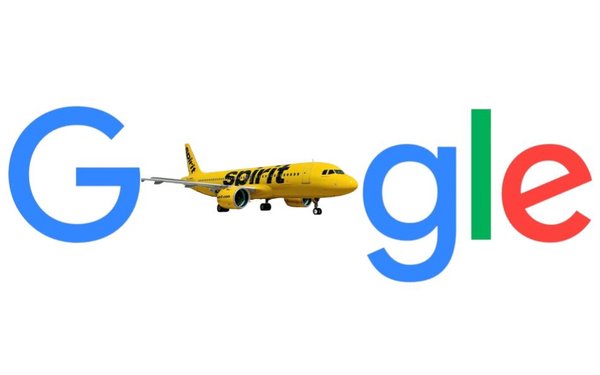
Google this week gained access to an archive of Spirit Airlines’ data that includes 100 million emails, 500 million chat messages,
documents, and operational history to train its AI systems for predictive ad targeting and dynamic pricing.
It does, however, exclude personal passenger and credit card information.
The $10 million purchase of data will be used to train Google’s AI systems to predict how consumers react to price changes and advertisements, ultimately optimizing dynamic
pricing to influence when and how people spend money.
advertisement
advertisement
Google has been acquiring similar elite consumer datasets by purchasing them from bankrupt companies, rather than simply
licensing it, as it has from third-parties like Reddit.
Its strategy is significant because it allows Google to bypass the standard tech industry bottleneck and licensing requirements to
obtain high quality data. By targeting bankrupt entities, Google exploits a legal and financial loophole to acquire restricted data at a steep discount.
Licensing data from going concerns
costs millions annually. Purchasing assets from a failing company allows Google to acquire entire datasets permanently for pennies on the dollar.
For Google's advertisers, it enhances
real-time margin and price optimization.
Google will learn a consumer's specific price sensitivity, and determine through AI when ads are best used to target consumers who are most likely to
convert.
“We acquired part of an enterprise dataset from Spirit Airlines, which can be helpful in improving our products and AI models,” Google said in a statement provided to
Bloomberg Law.
The data reveals how a large organization functions -- not merely what it does -- making it especially valuable as companies like Google seek training material beyond publicly
available internet content.
Through a bankruptcy auction, Google outbid AI data startup Mercor, which bid $7.5 million, to secure a massive repository of Spirit Airlines' internal history.
The transaction still requires approval from the U.S. Bankruptcy Court for the Southern District of New York. A hearing focusing on the sale is scheduled for later this week.
Another media
outlet that focuses on news about the airline industry described the data as "a huge record of how
a company communicated, priced inventory, managed employees and aircraft, responded when operations broke, and ultimately failed."
There have been several instances of companies finding and
using data in unusual places based on interesting circumstances.
MediaPost Editor In Chief Joe Mandese wrote in 2019 about Omnicom's Sparks & Honey's published report, Precision Consumer 2030, which puts "significant dimensions around the potential to apply" what the report
called "precision data."
Mandese noted precision data is the practice of using data unique to an individual consumer to create a product or use it to market a specific consumer in a unique
way.
Then there was the data incident with 23andMe founder Anne Wojcicki. When the company went bankrupt, Wojcicki created a foundation to buy the company’s data to keep it private.