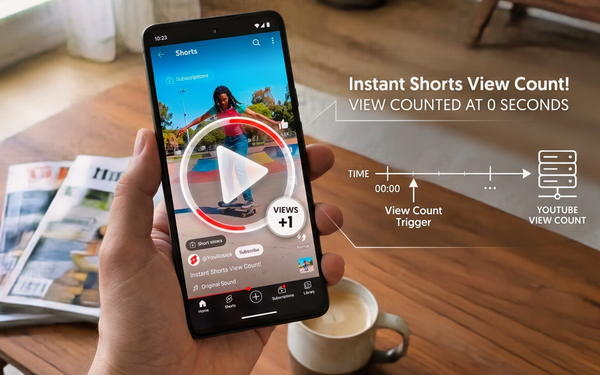
YouTube’s new
definition of a Shorts view, which counts a view as soon as a video starts playing, has prompted the predictable debate about whether views are becoming less meaningful.
It is a reasonable
question, but probably the wrong one. Marketers already have watch time, retention and engaged views to distinguish between a video starting and someone actually paying attention.
The more
interesting question is what that attention tells us about whether the marketing performed.
That question matters particularly in creator marketing. For much of the past decade, the
industry has treated attention as a proxy for influence.
The promise of creators is that, since they are similar to the peers of consumers, they can more readily change what people think and,
ultimately, what they do. Yet campaigns are still routinely judged by followers, reach, impressions, views and engagement -- not action.
advertisement
advertisement
Those numbers tell us whether content found an audience
and whether people interacted with it. They tell us much less about whether anyone believed the message, became interested in the product or behaved differently because of it.
Someone can watch fifteen seconds, enjoy the content, swipe away and never think about the brand again.
The view is real, but the commercial effect may not be. Social platforms are
built to make continued consumption almost effortless; the next video is always one swipe away, so watching for another few seconds is a very low bar. Attention matters, but it is only the beginning
of the process.
A click asks more of the audience. The viewer has to interrupt the feed and choose to go somewhere else.
A site visit does not prove that a purchase will
follow, but it is stronger evidence that the content created enough interest or credibility to prompt investigation.
A landing-page visit takes the audience another step away from passive
consumption and toward active consideration.
This is where creators should have an advantage over traditional advertising. Advertising is very good at buying opportunities to be
seen.
A creator can put a product into context, explain why it matters and make an unfamiliar proposition credible through a voice the audience has chosen to trust. That is a different kind of
influence, and it is why creators should be judged not only by how much attention they generate but by whether they can turn that attention into belief.
Views still have a role. They
tell marketers whether content is reaching people and whether audiences are watching.
The problem comes when that becomes the verdict on whether creator media worked.
A view measures
exposure, watch time gives us a better sense of attention, a click provides evidence of interest, a landing-page visit suggests investigation, and a conversion brings us closer to economic value. Each
tells us something different about what happened after the content appeared.
That does not mean every creator campaign should suddenly be judged on last-click attribution. Consumer
journeys are rarely that tidy. Someone may encounter a creator today, search for the brand tomorrow and buy next week, with several other exposures in between.
The answer is not to retreat to
softer metrics because the journey is complicated. Marketers can use clicks to optimize campaigns day to day, conversion data to measure business outcomes, and lift studies, MMM and other methods to
understand whether creator activity is contributing to broader changes in the business.
The same logic should change how brands think about which creators are worth paying for.
Once distribution can be bought, audience size becomes less important on its own. A smaller creator with deep expertise and an audience that genuinely trusts them may be far more valuable for a
complex or unfamiliar product than a larger creator who can generate millions of views without moving anyone further along the path to purchase.
AI makes this distinction even more
important. Its obvious use is to make the existing system more efficient: predict views, identify high-engagement creators and generate more variations designed to keep people watching.
The
bigger opportunity is to change what the system is trying to optimize in the first place. Instead of asking which creator or piece of content is most likely to generate attention, marketers can start
asking which combinations of creator, story, audience and distribution actually lead people to investigate, believe and act.
YouTube’s Shorts change does not make views
meaningless. It simply makes the limits of the metric harder to ignore. A view tells us that someone encountered the story, and watch time tells us they stayed with it for a while.
The
more important commercial question is what that story did after the scrolling stopped: whether it made the product more credible, created enough interest to investigate and ultimately changed what
someone decided to do.