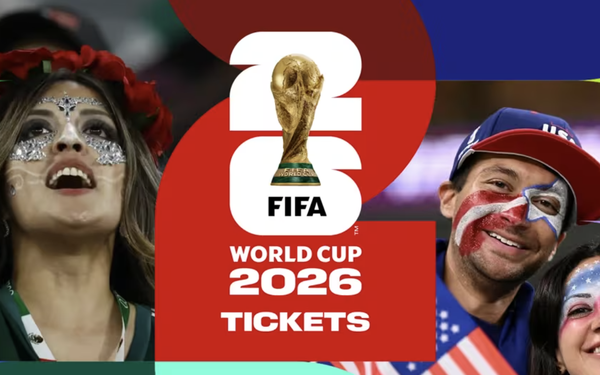
As fan
excitement builds in advance of the coming FIFA Games, it makes sense that so many brands have piled on to the pitch. But new research from Gartner finds the games are a crucible for all sports
sponsorship, with 84% of CMOs struggling to prove ROI or quantify their brand’s value. That’s expected to rise to 90% by 2028.
A major part of the problem, says Nicole Greene, vice
president and analyst at Gartner, is that the World Cup comes as CMOs are swimming in deeply unfamiliar seas.
Budgets keep shifting toward digital, people are increasingly skilled at avoiding
ads, and marketing teams are trapped in their own AI-driven doom loops that consistently over-prioritize digital performance metrics and starve high-impact offline channels.
“These games
are a big pressure test for CMOS,” Greene says. CMOs are struggling to tell their organizations two different stories.
advertisement
advertisement
First, they are trying to explain the value story of how artificial
intelligence (AI) is impacting the company, and second, precisely how sponsorship dollars are paying off.
In addition, they are trying not to reduce headcount while focusing on cost savings.
“All these marketing measurement challenges are compounding and coming to a head this summer,” she tells Marketing Daily.
For FIFA specifically, there is plenty of tension
about whether the hype will match reality. It’s hard to predict viewership, and there is plenty of negative news.
While FIFA predicts 6.5 million people will attend the games (with 6
billion watching or engaging with them), ticket sales have slowed, and hotels complain that the World Cup rush has yet to materialize.
Fans are bemoaning high ticket prices. And there's ongoing
skepticism that Americans will ever truly become the nation of soccer fans that so many companies are betting on.
The issues are bigger than that. “These questions aren’t about the
World Cup. This is about a major, longer duration sporting moment, and how brands can test a more quantifiable-based approach to telling the value story of the contribution of sports to their broader
marketing mix," says Greene.
An underlying tension is that many companies are spending heavily on sports not so much because they see good opportunities for their brand, but simply because
they feel they have to be there.
Between channel fragmentation, AI and consumer resistance, brand visibility is vanishing faster than most CMOs realize. Greene points to the shockwaves caused
by Google’s recent change to its search bar as the latest example.
“Discoverability is getting harder than ever,” she says. “Brands aren’t thinking enough about
the importance of visibility and trust right now, and how imperative it's going to be in their competitive environment very quickly.”
All that makes the theoretical argument for sports
sponsorship more important. “Sports are one of the few places where people are still tuning in, because you don't know what's going to happen,” she says. “Sports give people a
distraction from the world, which can be pretty brutal right now, and it gives you that element of surprise and friction that all humans like.”
But there are big executional risks, and
she says these summer games will certainly expose those who didn’t do their homework.
The key? Brands that recognize that disruption is out, while participation is essential. “A
30-second spot is designed to capture attention and divert it from the game. It takes away from the experience,” Greene says, adding that pure-play digital ads do the same. “Now,
it’s about seamless integration.”
That integration can include old-school visibility plays (think Gatorade coolers on the sidelines) and the growing use of hybrid event activations,
with people in the stands in costume, or posting on digital. "Marketers are getting more savvy about being part of the conversation and experience, rather than trying to pull people out of it,”
she says.
And sometimes the most measurable ROI is the oldest kind, and the extensive use companies make of sponsorship to offer tickets and VIP experiences to key vendors, customers and
partners. "People still matter," Greene says. "That handshake — where pictures get taken, and deals get done — is becoming more important, not less."