The real competitive advantage of loyalty is
learning why customers choose a brand, what makes them come back, and how to use that knowledge to make every future advertising dollar work harder, as the 2026 holiday season takes hold.
Media buying in this new age of technology is a link between a brand's artificial intelligence (AI)-powered shopping experience and its ability to create loyal customers.
The significant
shift is from buying media simply to generate impressions and sales to buying media that attracts the right customers. Both strategies help consumers experience the brand, and give them reasons to come back.
Virtual try-ons, AI personalization, and media buying should work as one connected system, with today's frequent purchases becoming more
common than long-term brand loyalty. Three in 10 shoppers buy clothes at least once a month, according to recent data.
advertisement
advertisement
Alliant, which combines deterministic transactional behavior
with psychology-driven predictive insight for brands, found that younger shoppers are more likely to describe themselves as loyal, with 19% of Gen Z saying they are loyal to an apparel brand, compared
with just 12% of Boomers.
The research found no meaningful difference in loyalty between men and women.
Only 16% of shoppers overall said they are loyal to
clothing brands, according to the research: The Why Behind the Buy: How Identity, Lifestyle, Social Influence, and Brand Meaning Shape Apparel Decisions.
Alliant’s new
series of reports examines the factors behind consumer purchasing decisions. It examines the U.S. apparel market, worth an estimated $373 billion in 2026, and explores the
relationship between identity, lifestyle, social influence and brand behavior.
In the research, four key findings stand out. Apparel purchases are shaped by identity, social inspiration,
lifestyle fit, and use case.
The four key findings are as follows: Frequent buyers are socially inspired and identity-motivated; brand loyalty is driven by self-expression and uniqueness;
shirts, pants, and shoes are purchased around real-life occasions; and cost matters, but lifestyle fit and brand meaning create deeper engagement between brands and consumers.
Just 13% of
shoppers subscribe to a clothing subscription service. Among those who do, Fabletics, Stitch Fix and Adore Me are the most popular services.
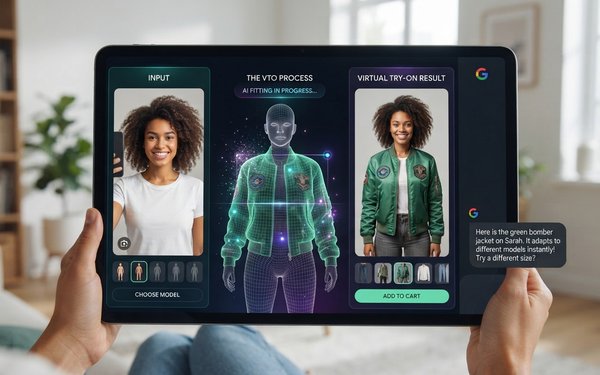
While frequent buyers are socially inspired, virtual try-on tools can influence behavior and alter the path to purchase.
Rather than serving
as a practical tool to check size or fit, the technology triggers specific psychological, social, and emotional behaviors in consumers and can act as reaffirmation. Many consumers seek outside
consensus.
OpenAI wants consumers to shop inside ChatGPT. This month the company launched a global virtual try-on feature for ChatGPT that allows users to see how clothes and accessories
look on them.
Powered by ChatGPT's Images 2.5 model, the system handles natural lighting and textures to generate realistic overlays from a personal reference photo, but it is not
guaranteed that the product will fit the consumer.
The tool is similar to Google's Shopping virtual try-on feature that launched in May 2025 and an experimental app called Doopl, released
in June 2025, and shutdown this year.
Building brand loyalty with a feature like ChatGPT's virtual try-on must move beyond a gimmick and become a part of the way consumers
shop.
Some of the important benefits and key risks include gaining the consumer's trust and confidence and reducing anxiety over "size and fit" that plagues online shopping. If the online
overlay matches reality, customers will return to the platform as their primary shopping search engine.
If an AI-generated preview looks perfect for a consumer but the physical item that
arrives by mail fits poorly due to the fabric or incorrect sizing, trust with the consumer can be permanently broken.
Some users are highly sensitive about biometric data and personal
photos, and data leaks or vague privacy policies can destroy a brand's reputation.
If features such as OpenAI's ChatGPT or Google shopping's
virtual try-on tools are to drive loyalty, marketers must treat AI as an extension of the physical fitting room, not just a marketing asset.