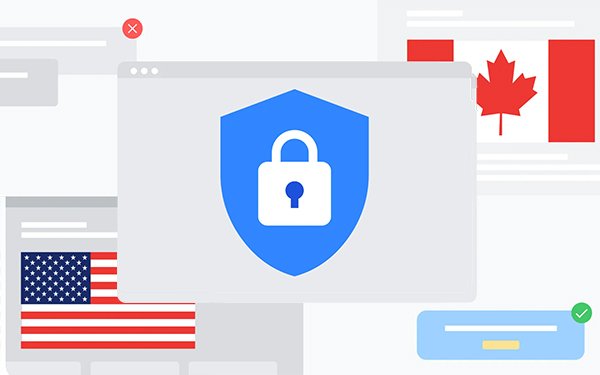
Google has published an update on expanding its
Financial Services Verification program across the U.S. and Canada to block scam ads before they reach people.
The program currently protects about 2 billion internet users across 42 countries
from financial scams.
As part of this rollout expected in early 2027, Google revealed a collaboration with the American Bankers Association to verify authorized institutions and protect users
from financial fraud.
Identity verification only confirms who pays for the account, but does not prove whether the advertiser is a licensed bank or lender.
The new update adds a more
aggressive method of verification. In addition to identity verification, Google adds a specialized check to validate an advertiser's credentials through the Financial Services Verification
program, which originally launched in 2022 to block scam ads.
advertisement
advertisement
"Under this policy, advertisers must demonstrate they are authorized by relevant regulators or recognized registries before
running certain financial ads, helping prevent brand impersonation and stopping bad actors from reaching people," Keerat Sharma, vice president and GM of Ads Privacy and safety, explained in a blog
post.
If an entity fails to clear the verification process, Google's systems will block the advertiser's financial campaigns before they can ever enter the live ad auction.
This
move builds on Google's work to require this type of verification, starting in the United Kingdom, and most recently expanding across
the European Union.
The ABA released a statement on Tuesday
calling Google’s expansion an important step toward preventing bad actors from impersonating trusted brands. He confirmed that the ABA worked closely with
Google to develop the necessary verification protocols using their dedicated registry.
Advertiser verification works with Google's safety systems. In 2025, Gemini helped its
systems identify more than 99% of policy-violating ads before they ever served, blocking bad ads in real time.
Google’s 2025 Ads Safety Report published in April 2026, stated that the
integration of Gemini AI shifted the way Google polices its systems across its advertising network changes.
By moving away from traditional keyword-based detection, Gemini allowed
Google's safety systems to look deeper for context and intent behind ad campaigns, blocking malicious ads at the moment they were submitted into the advertising platform.
Once verification
opens, advertisers will receive direct notification if and when they are required to complete the process.
This rolled-out approach ensures businesses have the necessary guidance to achieve
full compliance before official policy enforcement begins.
Google also said the change complements broader efforts like the Global Signal Exchange, where information is shared across
tech, finance, and law enforcement to stop fraud.