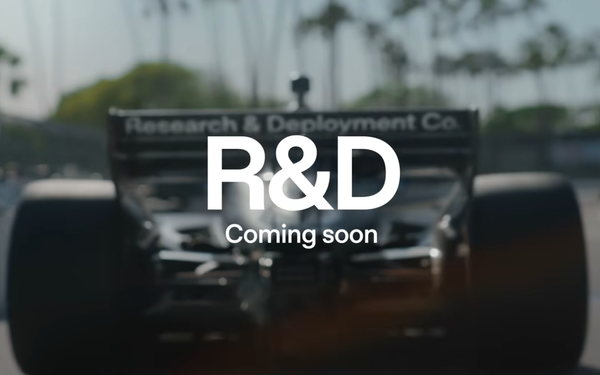
OpenAI and Chip Ganassi Racing have teased an expansion of their
joint venture through a video posted on YouTube titled “R&D: Part 1. Coming soon.”
The teaser -- a video released Thursday that is filled with innuendos -- identifies the start
of what promises to be an exploration into AI and motorsports.
The collaboration was initially announced in February 2025, marking OpenAI's first official collaboration in motorsports.
The joint venture was expanded in July 2025, when the partnership headed into marketing, and April 2026, when OpenAI stepped in as the primary sponsor for the No. 10 Honda for races in Long Beach
and Washington.
The teaser video provides an inside look into how OpenAI's research engineers work inside the pit to analyze complex racing data.
A key message from the
voiceover in the video is: "Everyone wants to take our spot," followed by: "I like that kind of pressure."
advertisement
advertisement
In another spot, the narrator says "We are here to win."
Rob Wills, director
of Netflix’s Formula 1: Drive to Survive, joined OpenAI’s project to lead a documentary.
Announcements around the joint venture are managed and issued on behalf of Sarah Russell,
head of integrated marketing at OpenAI, and are being structured, budgeted, and communicated out of OpenAI's core advertising and marketing division.
Russell’s reasoning behind the media
investment is that OpenAI is using the racetrack to show "new possibilities for how teams perform everywhere."
The partnership relates directly to marketing, advertising strategy, and ad media
buying through primary sponsorships -- targeting marketing based in Long Beach and Washington.
A post from April 2026 describes exactly how the two companies work together.
On the
track, OpenAI engineers and researchers work directly with pit crew and engineering departments during live races.
The joint venture supports three primary operational areas, but the focus
remains the ability for AI systems to rapidly ingest and process massive streams of telemetry, sensor, and track-condition data to identify micro-patterns that humans may miss.