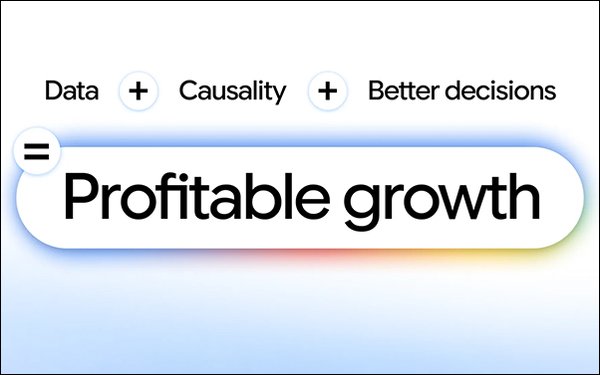
Marketing and business data should be used to
drive future growth -- not just report on past spending -- according to Google.
Three new tool enhancements were launched Friday to help advertisers bring together data across platforms to
support growth, some from artificial intelligence (AI) strategies. The goal is to build a strong data foundation for campaign management and measurement.
“We’ve spent years
investing in tools like Google tag and Data Manager to simplify how you manage and activate your customer data.” Nipoon Malhotra, vice president of ads analytics, insights, and measurement,
wrote in a blog post.
"Data Manager" is being integrated into Google Analytics and Display & Video 360. It aims to simplify how businesses collect, manage and use their
customer data by breaking down the silo between marketing analytics and enterprise media buying and allows advertisers to instantly feed their data directly into both platforms through one
pipeline.
advertisement
advertisement
"Data Manager API" universal will adopt the industry-standard IAB Tech Lab’s ECAPI, a technical specification designed to standardize server-to-server communication
of marketing events and conversions from advertisers' systems directly to advertising platforms and partners.
ECAPI was released as a final specification in early 2026. It aims to solve the
severe fragmentation in the digital advertising industry caused by major ad networks like Google, Meta, and TikTok historically forcing advertisers to use their own proprietary Conversion APIs
(CAPIs).
Google also introduced the "Data Strength Uplift Metric" in Google Ads, enabling marketers to measure the value of first-party data. The dashboard scorecard estimates the additional
conversions recovered through its use.
Before the Data Strength Uplift Metric tool was introduced, engineering teams would invest
months building server-side tagging or cleaning CRM data. ]
The problem occurred when conversion numbers rose. The marketer could not prove whether the increase was due to real business
growth or whether it was recovering data that browser blockers had hidden.
Upgrading Meridian -- Google’s open-source marketing-mix model, with agentic capabilities --
was one of the upgrades. The capabilities help marketers audit data quality, resolve errors, and guide model building in real time.
Marketers can now include relevant brand signals like
Branded Google Query Volume into Meridian to prove how upper-funnel campaigns drive sales.
Google officially launched Meridian GeoX globally after introducing it in beta earlier
this year.
GeoX gives marketers an open-source tool to run causal geo-experiments and incorporate incrementality results into their Marketing Mix Modeling to improve accuracy.
The
integration of geo-experiments with Google’s core Marketing Mix Modeling (MMM) framework, Meridian, allows marketers to definitively anchor their data models to real-world incrementality results
rather than relying purely on correlative statistical patterns.
Earlier this year, Gaurav Bhaya, vice president and general manager of measurement at Google, introduced new features at Marketing Live that integrate into Google Analytics and
Meridian, its marketing-mix modeling platform. The enhancements offered an overview of data sources driving a brand’s campaigns in Google Ads, Google Analytics, and Google Marketing
Platform.