Newer televisions have
something referred to as "off" hours -- the time when no one is watching a program, but the TV has been powered down to remain on ambient mode.
Evidently, advertisers have thought of a
reason to keep TVs in ambient mode -- not because they want to waste electricity, but because they have a reason to keep the machine going.
Companies are calling this time "off"
hours.
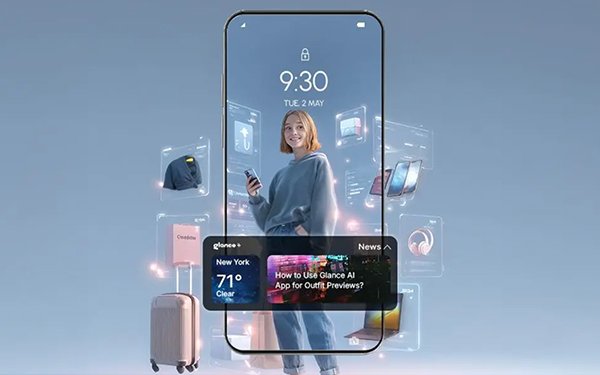
Google and Glance, an AI-powered personal shopping platform backed by global technology company InMobi, this week announced a partnership to improve on the television experience by
bringing AI-powered commerce to Android TVs.
While traditional ambient modes offer limited utility for the TV when not in use, the Glance-powered experience turns the screen into a continuous
ad.
advertisement
advertisement
The partnership and technology, announced Wednesday are available now. This changes the ambient screen from a passive black background in the
room into an interactive, AI-driven portal where consumers can shop and discover products.
The integration took more than a year and a half to fully build and expand.
The technology is available throughout the United States, India, and Japan, and the integration is powered by an intelligent shopping agent.
While the
core AI capabilities began rolling out to phones in early 2025, it took a little more than 20 months of engineering and scaling to cross onto television screens.
While an interactive TV
ambient screen provides brand exposure and top-of-funnel awareness, its core architecture is built for direct-response and performance-driven results because consumers can make purchases from the
screen.
Glance's technology is integrated into Google Backdrop, Android TV’s default screensaver. Users have to opt in to Glance.
They can do this by opting in, which means
switching to Glance on Backdrop, and when they are prompted to enable Glance.
The experience is shoppable, bringing commerce to the TV and letting consumers find and
purchase products naturally.Viewers can explore their personalized inspiration, discover products from Glance’s retail partners and see themselves in an outfit through
virtual try-on, right on their TV.
A quick scan with a consumer's phone allows them to share a selfie to try out or check out on the retailer’s site.
This is powered by
Glance’s AI shopping agent, which draws on real-time inventory from more than 500 brands.
Several months ago when I had a new TV installed, the installer asked if I wanted the capability
to completely shut down the TV or put it on standby in case I quickly wanted to power it on.
I couldn't think of a reason to waste electricity, so I requested the electronics be shut off
completely.
Modern televisions on standby mode typically draw about 0.5 watts of power, amounting to a very small annual cost of about
one to five dollars
per device, according to a quick search on Google AI Mode.When operating in ambient, art, or
gallery mode, a television typically consumes 15% to 40% of its normal viewing power, drawing on reduced backlighting and slower processing to conserve energy.
This translates to an estimated draw of 20 watts for smaller screens or up to 72 watts depending on the model and configuration, while relying on sensor wake-up
modes drops consumption to a mere 0.5 watts, according to a quick search on Google AI Mode.
Even at these low numbers, I find it difficult to believe consumers are okay with
wasting any amount of energy.
Brands take advantage of user data through the cross-screen shopping agent that bridges the gap
between the consumer's living room and phone.
Instead of viewing the TV as an isolated device, advertisers use the partnership
integration to build a profile of the household in which the TV sits.
Glance has posted guidelines for advertisers. The company says that once
advertisers sign a campaign contract with Glance and share existing creatives’ open files, the Creative Labs team does a quality analysis of the creative and converts it into a format
that is compatible with Glance for the campaign.