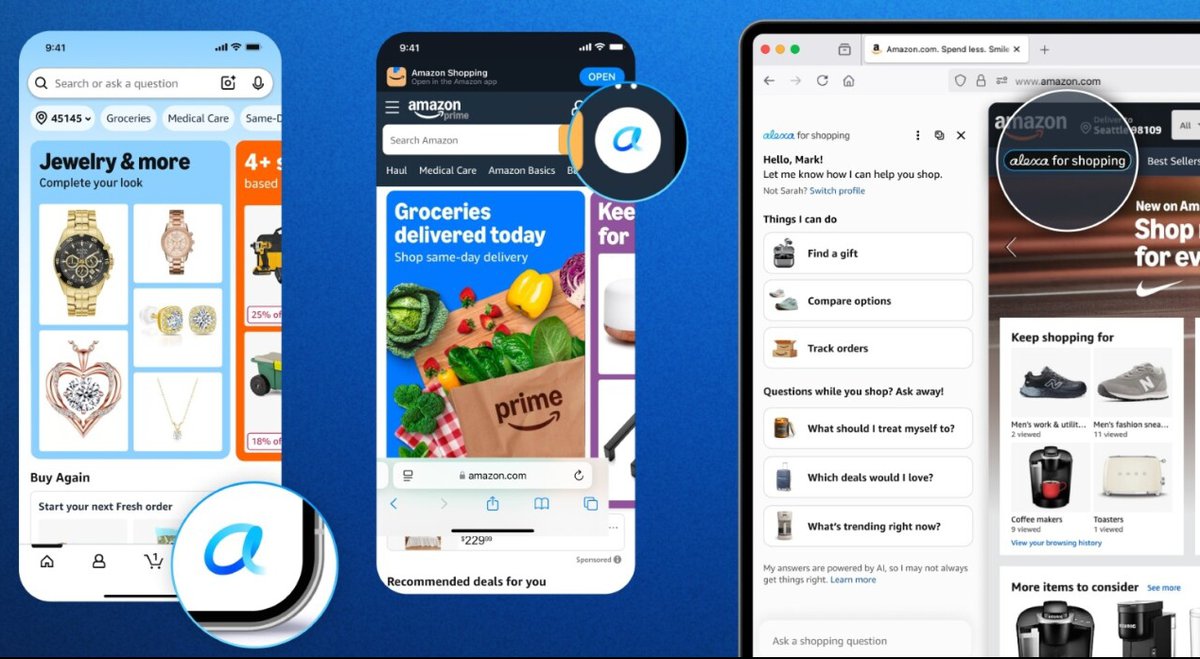
Amazon on Wednesday replaced Rufus with “Alexa for
Shopping,” an ecommerce AI bot that can answer queries and take actions on behalf of users.
The new tool combines Rufus and Alexa+ technologies, pulling in user shopping history
and other data, similar to other personalized AI assistants for shopping, but now customers can ask Alexa for Shopping questions directly in Amazon's search bar. The underlying Rufus capabilities and
technology continue to power parts of the experience behind the scenes. The change is more around the customer-facing branding and interface experience evolving into Alexa for Shopping.
It
personalizes shopping experiences by enabling consumers to ask all types of questions related to category and products directly in search results and on product pages, generate dynamic product
comparisons, view up to a full year of price history, and automate deal-finding, cart-building, and routine purchases based on personalized insights.
advertisement
advertisement
No Prime membership or Echo device is
required for these searches. The experience is also available on Echo Show, a line of voice-controlled smart displays developed by Amazon.
This strategy shift creates several strategic
advantages for media buyers and advertisers. Ads align with a user’s 12-month purchase, price, and browsing history, so brands choosing to advertise can bid on long-tail, natural-language
queries rather than static search terms.
Sponsored products can surface directly inside the search bar. Advertisers can target users when the AI bot predicts a routine reorder.
AI
technologies make it easier for brands to identify product details that consumers search on, so advertisers can optimize those words in product pages to attract agentic bots. The more explanation on
data pages, the greater the likelihood that AI bots will recommend the products as consumers conduct their research.
Amazon provides an example, describing a daughter with a science fair
project who brainstorms ideas with her mother and with Alexa on their Echo and decided to do the project on a homemade volcano.
In the example, the daughter asks the Amazon Shopping app to
“please suggest supplies for my science fair project that we talked about.” Alexa for Shopping recommends supplies for the homemade volcano and the daughter adds them to the cart, and the
pieces to build the volcano are on their doorstep that evening.
Using the main search bar, the search experience recognizes when the user asks a question and Alexa for Shopping can help
answer it — from general questions like "What's a good skincare routine for men?" to product comparisons like "Breville Barista Express vs Pro" or "Compare Kindles," to order inquiries like
"When did I last order AA batteries?" or "Where is my order?"
Amazon suggests that the combination of product expertise and personalization makes Alexa for Shopping the best AI
assistant. What is shared with Alexa on an Echo and other Alexa-enabled devices informs the shopping experience on Amazon through data picked up in conversations, browsing, and purchases. Even product
searches in Google, for example, have direct links to Amazon's marketplace.
The marketplace unveiled Rufus as a key part of its website and app little more than two years ago, with the goal to
expand the strategy on generative AI through its platforms.
Amazon will discontinue the stand-alone chatbot, but it plans to use Rufus’ recommendation technology and shopping history for
certain Alexa for Shopping queries. Users can summon Alexa for Shopping by clicking a cursive A icon on Amazon’s website or app, or via Echo Show displays.