Google on Monday introduced a way to buy and
measure vertical video space programmatically across channels including platforms, apps and publishers in a single platform to centralize media buys powered by Gemini AI measurement
capabilities.
"Vertical Video Unification" in Google Display & Video 360 (DV360) makes it possible for advertisers to buy and measure vertical video programmatically across channels
in one platform, as consumers span many platforms to find the correct products and information.
Bringing together the ability to run and track video campaigns across channels in DV360 enables
advertisers to manage channels across social media and with publishers from one place across different platforms.
"We've been preparing for the mobile-first advertising shift for years, but this level of unification changes everything," Marta Martinez, managing director
at Google Marketing Platforms, wrote in a blog post.
advertisement
advertisement
The main difference between vertical video and traditional or horizontal video is the aspect ratio and orientation of the frame,
and in advertising it changes the way users interact with a brand, how much the ads cost, and how it captures the attention of the viewer.
Artificial intelligence (AI) has helped to
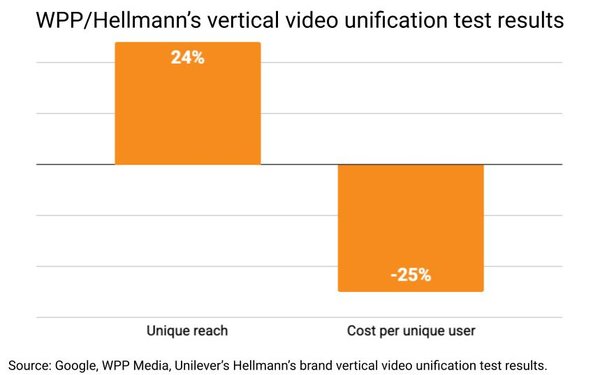
improve performance. Unilever, supported by WPP Media, reported a 24% boost in campaign reach in early tests, which also showed that cost per unique user fell by 25%.
Previously, advertisers looking to run vertical video ads across different publishers had to log in to multiple platforms, set up separate budgets, and manage different target audiences.
DV360 now allows advertisers to upload their vertical video asset once and distribute it programmatically across multiple major inventory sources and publishers simultaneously.
The system
automatically formats and delivers the ads to various apps and sites that support vertical video, which on Google's platform refers to "native 9:16 portrait content integrated across Google's search
results, AI tools, and advertising ecosystems."
This is intended to provide access to diverse inventory -- including premium open-web publishers, streaming apps, and social environments --
from one dashboard.
DV360 also provides one view of reporting in a variety of channels the ad ran in, to provide insight on publishers driving the highest completion rates, total reach and
frequency across all channels without duplicating audience counts, and standardized metrics like views, clicks, and conversions using the same measurement rules.
When Gemini became
the operating layer of Google's demand-side platform (DSP) earlier this year to take on a greater role in media planning and buying, it made it possible to bring together tracking and
reporting of vertical videos across multiple channels.
Gemini AI now handles full-funnel measurement in DV360. It tracks how a user interacts with a top-of-funnel vertical
video ad on one platform and links that behavior to mid-funnel consideration or bottom-of-funnel conversion actions on another, according to Google.